
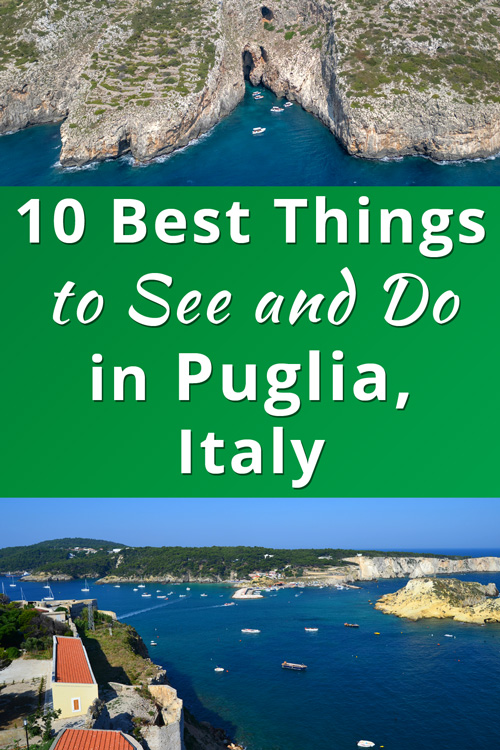
The Puglia region is located at the heel of Italy and hides sea caves, white towns, and ancient stone huts called trulli.
In this guide, we’ll explore 10 of the best things to see and do in Puglia that, I hope, will inspire your next travel itinerary.
Some of these things include watching cliff divers in Polignano a Mare or seeing the golden Baroque streets of Lecce. Fresh seafood by the Adriatic is a must-try too!
In the end, these bucket-list ideas will definitely show you why Puglia is unforgettable.
So, let’s begin right away!
Don’t miss: 18 Best Beach Towns in Puglia, Italy: Travel Ideas, Inspiration, Tips
Keep in mind: Our articles may contain errors, despite our best efforts. So, do a thorough research before deciding on a travel destination.
The Best Things to See & Do in Puglia, Italy: My Favorites
1. Visit Polignano a Mare and its Beaches
This video will be loaded from YouTube.com, a third party. If you click "Play", you accept their terms of service, and their use of cookies.
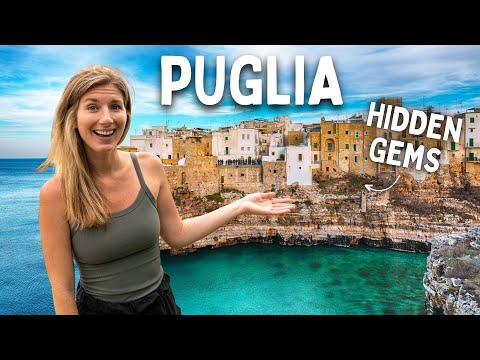
Polignano a Mare started around the 4th century BC when Greek traders built a port on tall sea cliffs. Later, Romans and Normans left their marks on its old town.
The village is best known as the birthplace of singer Domenico Modugno and for its summer cliff-diving contests. You can walk narrow streets to reach the small beach at Lama Monachile or explore sea caves by boat.
Watching athletes leap from 20-meter heights is quite the spectacle. Cafés serve fresh seafood, and local poems cover the walls, making every corner feel alive.
Read next: 15 Luxury Beach Towns in Italy for Your Next Travel Adventure
2. The White City Of Ostuni

This video will be loaded from YouTube.com, a third party. If you click "Play", you accept their terms of service, and their use of cookies.
Ostuni‘s roots stretch back to Paleolithic times, when Neanderthals took shelter in nearby caves. The town’s name comes from its houses painted in lime white, which helped keep them cool under the hot sun.
Every July, Ostuni hosts a White Night event. Shops stay open late, and music fills the streets, creating a good atmosphere.
For great views, climb up to Piazza della Libertà. From there, you can see olive groves spreading out below and the Adriatic Sea in the distance.
Don’t miss the Cathedral of Santa Maria Assunta. You can also walk through the streets, then relax on beaches just a few kilometers away.
Must read: 25 Best Italian Beach Towns for Your Next Summer Holiday
3. The Maldives Of Salento (Marina Di Pescoluse) and other Ionian Coast Beaches

This video will be loaded from YouTube.com, a third party. If you click "Play", you accept their terms of service, and their use of cookies.
The Maldives of Salento got their nickname because their white sand and clear waters reminded visitors of the Indian islands.
This seven-kilometer stretch near Marina di Pescoluse has won Blue Flag awards for its clean sea. You’ll find beach clubs with umbrellas, plus windsurfing and snorkeling opportunities.
Behind the shore, dunes bloom with fragrant wildflowers. You can also take boat rides to hidden places or explore prehistoric caves.
Nearby, Salve offers masserie and restaurants where you can taste dishes made with local olive oil.
Read next: 10 Best Things To See & Do in Sicily, Italy: Don’t Miss These!
4. Take a Dip in the Caves of Santa Maria Di Leuca

(Santa Maria di Leuca, Province of Lecce, Italy – Photo by Bartosz Kasperski)
At Italy’s southern tip, Santa Maria di Leuca was known as Finibus Terrae by the Romans, marking the edge of land before the open sea. A temple to Minerva once stood here, later transformed into a basilica.
A lighthouse built in the 1800s still guides ships through these waters. Beneath the cliffs, you’ll find about twenty sea caves with names like the Cave of the Giants and the Cave of the Three Doors.
You can take guided boat tours to see stalactite formations up close. Snorkeling in the calm inlets is another popular way to explore, while local captains share legends of hidden treasures.
Read also: 9 Mistakes to Avoid in Italy for a Stress-Free Adventure
5. See The Tremiti Islands

(Tremiti Islands by Vito Manzari, CC BY 2.0)
The Tremiti Islands are a group of five small islands located 20 km off the Gargano coast. The Greeks called them Insulae Diomedae after the hero Diomedes.
Later, the Romans used these islands as a prison outpost. Today, they form a marine reserve famous for its clear waters and rare fish.
Ferries from Termoli or Vieste take you to San Domino or San Nicola. There, pine woods meet rocky cliffs in a stunning mix.
You can hike forest trails, swim in hidden coves, or hop on glass-bottom boat trips to watch sea life along underwater walls.
Must read: 15 Things To Do on the Amalfi Coast (Italy): Ideas for Every Type of Traveler
6. Explore Lecce’s Historic Center at Sunset
Lecce began as a Roman town over 2,000 years ago and became famous in the 1600s for its Baroque stone carvings.
Local craftspeople shaped soft golden limestone into ornate churches like Santa Croce and a grand cathedral in Piazza del Duomo.
At sunset, the facades glow a warm orange. Guided walks show carved symbols on pillars and portals.
You can also visit the Roman amphitheater near Piazza Sant’Oronzo. Afterwards, pause for gelato at a café facing the glowing monuments.
Read next: 15 Best Beaches in Sardinia, Italy for Your Summer Holidays
7. Observe the Distinctive Trulli Up Close
Trulli are dry-stone huts with conical roofs, built from the 14th century so farmers could remove them quickly and avoid housing taxes. These whitewashed structures are located in the Itria Valley.
Alberobello hosts the largest concentration and has a UNESCO designation. Look for painted symbols on rooftops meant to bring good luck.
You can enter Trullo Sovrano, the only two-story example. There’s also the Trullo Church of Sant’Antonio to explore, plus shops inside restored trulli selling crafts and local foods.
8. Enjoy Seaside Aperitifs in Gallipoli
Gallipoli began as the Greek colony Kallipolis and later grew into a fortified town under the Angevins and Aragonese. Its old quarter sits on an island connected by a 16th-century bridge.
In the evenings, crowds gather at bars along the Lungomare, ordering small snacks and a glass of Salento white wine. Nearby, you can admire the Fontana Greca, a Renaissance fountain adorned with carved faces.
A short walk takes you to the Angevin Castle, where fishing boats light up the harbor at twilight.
9. Peschici, Its Caves, and the Magic of Gargano
Peschici is a medieval village that, according to legends, Emperor Otto I gave to Slavic settlers around the year 1000. Later, it became a Norman stronghold with walls and a castle over the Adriatic.
On rocky cliffs, you’ll find ancient wooden fishing platforms called trabucchi. These have now been turned into charming sea-front restaurants.
You can hike trails in Gargano National Park or explore caves near Zaiana bay. When you want to relax, you can head to the sandy shores at Manaccora.
Don’t miss local olive oil, cheese, and taralli, all sold in the town’s markets.
10. The Charming Town of Vieste
Vieste sits on a rocky cape that the Greeks might have called Uria, and later the Romans linked it to the goddess Vesta. Frederick II rebuilt its cliff-top castle and the nearby cathedral in the 13th century.
In the medieval quarter, characteristic streets weave between white homes, leading to viewpoints over Marina Piccola.
Boat tours leave daily for sea caves like the Cave of the Campana Piccola and the Pizzomunno sea stack.