
In Italy, you’ll find many small towns where life just drifts by. Beauty hides in the little things you might miss if you’re not looking.
If you’re into cottagecore – the rustic charm, handmade things, and quiet countryside days – these places feel like something out of a book.
Stone houses lean into narrow lanes, balconies burst with flowers, and olive groves stretch out under the sun.
You’ll find yourself slowing down. You’ll taste local cheese, wander through medieval streets, or just watch the sunset melt over rolling hills.
Each town has its own kind of magic. Some perch on hilltops, others sprawl beside rivers.
They’re not for rushing. You’re not checking off bucket-list sights here. It’s about enjoying the rhythm of daily life and finding joy in the smallest things.
Today, let’s explore 10 Italian towns that capture that cottagecore spirit and see where we end up…
You’ll also love: 10 Best Small Towns in the USA to Visit for Cottagecore Lovers
Keep in mind: Our articles may contain errors, despite our best efforts. So, do thorough research before deciding on a travel destination.
1. Brisighella (Emilia-Romagna)

This video will be loaded from YouTube.com, a third party. If you click "Play", you accept their terms of service, and their use of cookies.
Brisighella feels like a quiet village, between olive groves and gentle hills. Walk its stone lanes and you’ll see pastel homes and little archways that open into hidden courtyards.
The town’s famous Via degli Asini, or Donkey’s Alley, is a covered walkway built right into the houses. Donkeys once hauled goods along this path. You can still walk it today.
Above the center, three hills rise up. There’s a fortress, a clock tower, and a church, each one offering views of the countryside.
Olive oil matters a lot here. You can taste it at local mills or in small cafes. You can stop for a slow lunch with bread, cheese, and local vegetables. And relax in the afternoon if you feel like it.
In the fall, the air smells like harvest and warm earth. People still tend small plots of land, and artisans sell simple, thoughtful pieces.
Curious about the past? Maybe read up on how the fortress protected the town in medieval times.
In the evening, you can find a quiet spot with a view. Settle in with a glass of regional wine, some olives, and roasted peppers… It’s an easy and cozy way to end the day.
Don’t miss: Italy in Winter: 10 Best Destinations for a Magical Vacation
2. Pienza (Tuscany)

This video will be loaded from YouTube.com, a third party. If you click "Play", you accept their terms of service, and their use of cookies.
Pienza sits in the Val d’Orcia, surrounded by fields and cypress-lined roads. Farmhouse silhouettes are in the hills.
The town was redesigned in the 1400s by Pope Pius II to be a model Renaissance city. That’s why the streets feel so calm and thoughtfully planned.
It’s famous for pecorino cheese. You’ll see wheels aging in tiny shops along the lanes.
You can grab a simple board of pecorino, honey, and fresh bread. And sit, snack, and just stare out at the hills for a while.
Stone buildings glow in the late afternoon. Small balconies spill over with flowers, sometimes a little wild.
It’s neat that the town’s careful urban design inspired ideas about human-scale city planning. You can sense that intention as you walk.
For a peaceful day, check out the Cathedral and the main square. Afterward, follow the panoramic walk that hugs the edge of town.
This path stays quiet, offering views of fields and distant farmhouses. In spring, wildflowers add color across the valley and give the scenery a burst of life.
You can take short countryside strolls and maybe stop by a family farm for a snack or a quick chat. People are friendly if you’re up for it.
As evening settles in, pick a tiny trattoria. You can order pasta with pecorino and black pepper, and taste a cup of red wine from the nearby vineyards.
Read also: 27 Best Small Towns in Tuscany, Italy, that You Should Visit
3. Spello (Umbria)
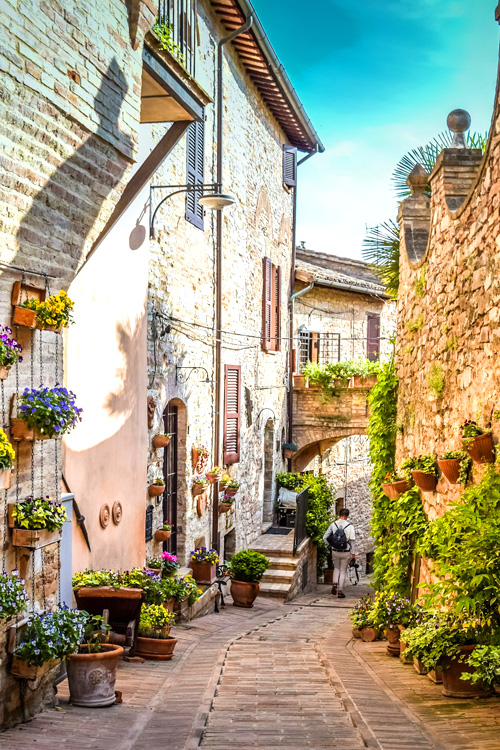
(Spello, Umbria, Italy – Photo by Alessandro De Marco)
Spello brings together old stone lanes and pink-hued buildings. Balconies with flowers hang above, catching your eye at every turn.
The town is famous for the Infiorata, a yearly event where locals lay down carpets of petals in beautiful patterns. It’s a sight that feels magical…
Roman gates still stand at the edge of town. You’ll see pieces of ancient walls tucked between houses.
Art lovers might want to visit the Baglioni Chapel. Inside, you’ll find frescoes by Pinturicchio, detailed scenes painted in gentle colors.
Spello is on a hillside, so you get lovely views of olive groves and rolling fields. Take your time in the narrow alleys, and if the sun’s out, stop for coffee.
The local olive oil is smooth and grassy. Try it with fresh bread and simple vegetables. It’s hard to beat…
Here’s a little detail I love: the town’s rose-stone gives the buildings a warm glow, especially at sunset. In spring and summer, window boxes burst with geraniums and jasmine, making the air sweet.
For a slow afternoon, follow the path around the edge of town. You’ll see small shrines, tangled vines, and maybe a fig tree or two.
You can end your day with a plate of bruschetta topped with local oil and tomatoes. Add a glass of Umbrian wine, and enjoy it at a tiny table outside… There’s really nothing better!
Read next: From Turin to Taormina: 10 Best Italian Cities for Your Autumn Itinerary
4. Civita di Bagnoregio (Lazio)
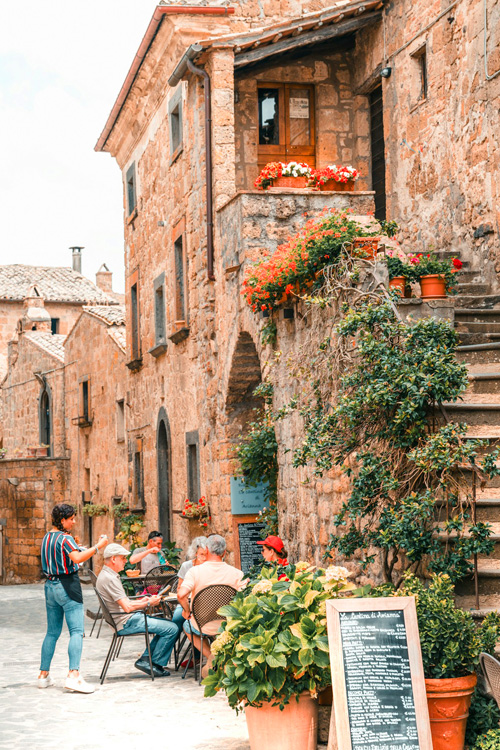
(Civita di Bagnoregio, Lazio, Italy – Photo by Heidi Kaden)
Civita di Bagnoregio is located on a fragile hill of volcanic rock. You reach it by crossing a long footbridge that really feels like a passage into a quieter time.
People call it the “dying town” because erosion keeps eating away at the base. That slow decay makes the place delicate, and, in a way, even more special.
Inside, narrow lanes go between stone houses covered in ivy and flowers. The central square is tiny, with a church and some old wells.
Here’s something interesting: ancient volcanic activity shaped the area, leaving behind soft tufaceous rock that’s easy to carve. You can still find homes and cellars cut right into the stone.
Sometimes, when fog rolls in, the village almost floats above the valley. It’s surreal…
You can spend your morning visiting tiny courtyards or simple shops. At some point, find a viewpoint and watch swallows dip and rise over the rooftops.
For lunch, you can go for a plate of local pasta with light tomato sauce and whatever greens are in season.
Life here moves at a gentle pace. Even the sounds seem to drift more slowly.
When the sun starts to set, the bridge glows and the town’s stone walls turn a warm and golden color. Find a spot on a low step, with a small glass of wine, and watch the sky fade to blue…
5. Anghiari (Tuscany)
Anghiari is a hill town with tight streets, stone steps, and hand-built houses that feel sturdy and real.
It’s known for the Battle of Anghiari (1440), which Leonardo da Vinci famously tried to paint. The original work was lost, but the story still weaves through local identity.
From the main terrace, you get a wide view of the valley, where farms work the land. Walk slowly and see artisan workshops making textiles, wood goods, and simple home pieces.
The town really celebrates craft and care. You’ll find small shops, and the owners usually love talking about their work.
A curiosity: old defensive walls still ring parts of Anghiari. You can trace them on foot if you’re up for a bit of walking.
As for food, try a plate of tordelli or a rustic soup. Pair it with olive oil and herbs from nearby fields.
The rhythm here just invites you to pause. Maybe sit on a low wall, watch dogs trot by, and listen to footsteps through the alleys.
When late afternoon comes, the stone glows and shadows stretch along the lanes. To end your day, try a shared board of local cheese and salumi, a basket of bread, and a quiet view over the valley.
Must read: 37 Best Things To Do in Tuscany, Italy: Quick Ideas for Your Bucket List
6. Treia (Marche)
Treia sits on a ridge in the Marche region. Its calm piazzas and streets carry the weight of centuries.
The town has Roman roots. People named it after the goddess Trea, who locals once worshipped here.
Medieval walls and towers shaped Treia’s fortified look. Later, neoclassical buildings brought a touch of elegance in the 18th and 19th centuries.
One tradition stands out: the “Disfida del Bracciale.” Locals play this old ball game with wooden bracelets every summer, dressing up and filling the streets with energy.
If you walk through the center, you’ll see the Piazza della Repubblica. The Accademia Georgica and the Cathedral both represent Treia’s cultural scene.
Orchards and olive groves sprawl across the countryside. Still, Treia’s real soul lives in its stone lanes and graceful old buildings.
You can maybe stop for a meal. Something simple, like local pasta or legumes. Try Verdicchio wine from the nearby hills if you’re up for it.
In the evenings, neighbors gather in the square, chatting and strolling as the day ends.
7. Malcesine (Lake Garda, Veneto)
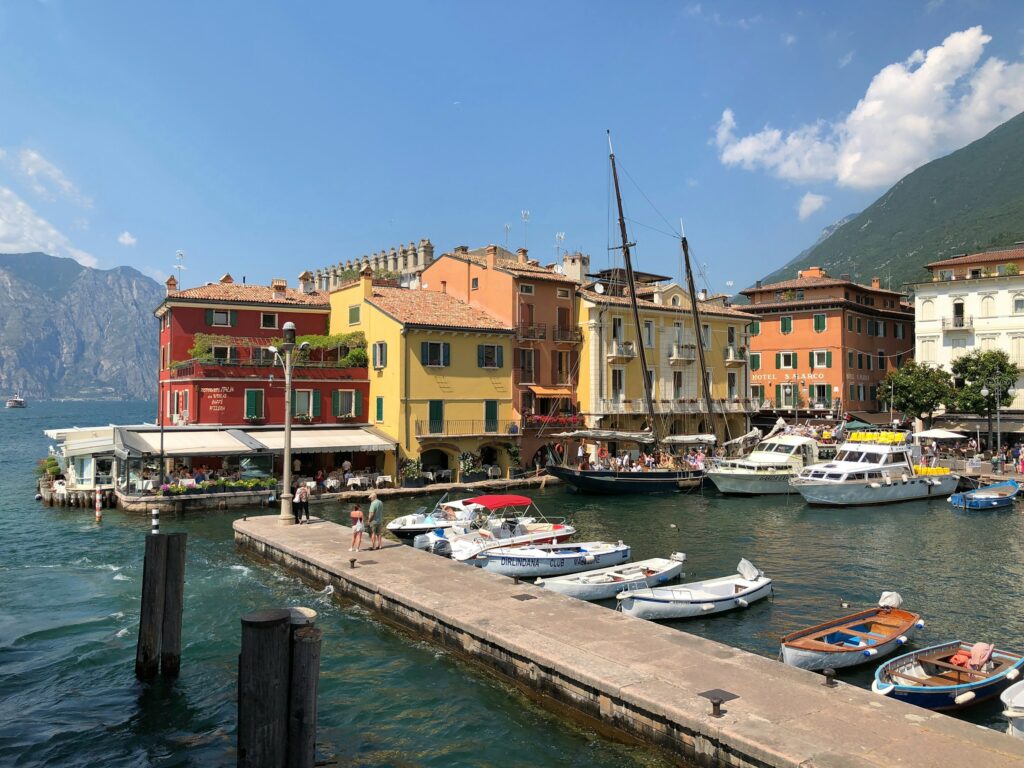
(Malcesine, Italy – Photo by Marco Ghirello)
Malcesine is located in Lake Garda. A medieval castle sits above the water, and narrow lanes lead to small squares and wooden docks.
The lake gives the town a gentle and breezy feeling. You’ll see sailboats and ducks gliding across the calm blue.
The Scaliger Castle has a tower you can climb for views of the lake and Monte Baldo. Over the centuries, different rulers changed the castle’s structure, which you can see in its walls and courtyards.
You can also take the cable car up Monte Baldo. Alpine meadows and wildflowers show up in season.
Next, come back down for a quiet lunch by the water. Fresh fish, grilled vegetables, and lemony olive oil make a simple plate that just feels amazing. Vineyards and olive groves surround the town, adding to its rural charm.
By late afternoon, dockside cafes fill with people talking softly. Here, you can pick a light dessert and a warm drink, and let the evening drift in.
You’ll hear the water lapping against the stones, creating a calm that stays with you.
Don’t miss: 10 Best Towns & Villages in Lake Garda that You Should Visit
8. Orvieto (Umbria)
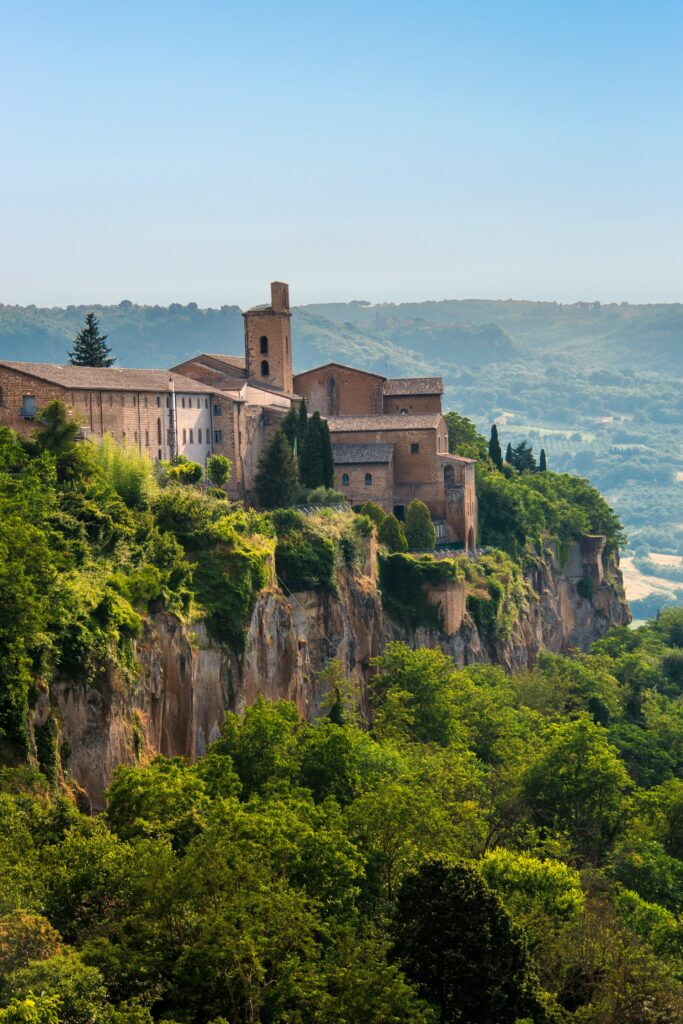
(Orvieto, Italy – Photo by Gabriel Tovar)
Orvieto rises on a tufa cliff, dramatic and a bit mysterious. You can feel the history right under your feet.
The city’s underground tunnels and caves once stored food and wine. Some even became secret escape routes, and you can tour a few of these hidden places today.
Up above, the striped Duomo catches the sunlight with its detailed stonework. The mosaics splash stories across the front in color and gold.
Orvieto Classico white wine is a local treasure. It’s crisp, easy to drink, and pairs well with whatever snacks you find.
In small workshops, you can pick up ceramics painted with bright, cheerful patterns.
Fun fact: The ancient Etruscans dug deep wells into the rock. They really knew how to adapt to living on a cliff.
For lunch, you can order a bowl of umbrichelli pasta with a simple sauce. Add some grilled vegetables and some local olive oil.
Walking the panoramic loop around town, you’ll see valley views and tiny gardens clinging to the terraces.
9. Bosa (Sardinia)
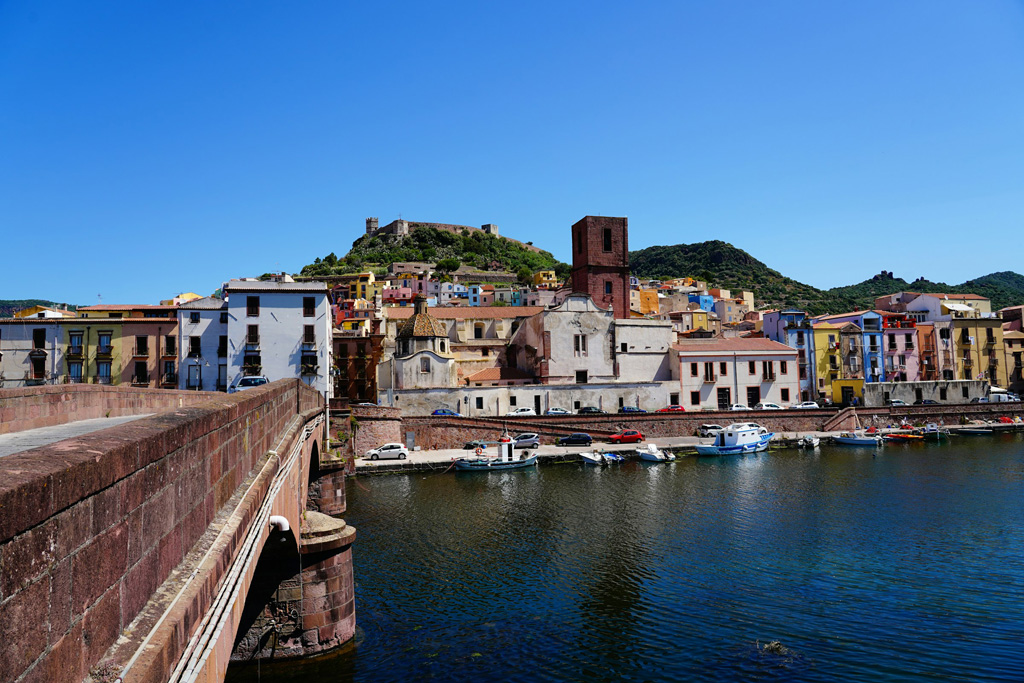
(Bosa, Italy – Photo by Jürgen Scheeff)
Bosa stretches along the Temo River with pastel houses stacked up like someone painted them there. A quiet old castle keeps watch from the hill above.
The river once buzzed with tanneries. You can still see the old buildings that belonged to this trade along the banks.
Lace-making and fishing still shape daily life here. You’ll notice the slower pace and old traditions as you walk around.
If you cross the stone bridge and stroll beside the water, you’ll see boats rocking gently, and laundry flapping in the breeze.
The historic center has narrow streets and little squares where neighbors stop to chat. It feels genuine, not staged for visitors.
Here you can grab a simple meal. Maybe fresh fish, ripe tomatoes, and bread, with olive oil and a squeeze of lemon. Nothing fancy, but it feels great!
Fun detail: Bosa’s Malvasia wine tastes gently sweet. It goes great with local desserts, if you’re into that.
You can climb up to the castle for an amazing view of the town, river, and, way out there, the sea.
The colors here stay warm, and the evening light seems to last a little longer. As the town settles into quiet, you can let the rhythm of the river carry your thoughts wherever they want to go…
Read also: 15 Best Things to See & Do in Sardinia: Experiences You Can’t Miss
10. Ostuni (Puglia)
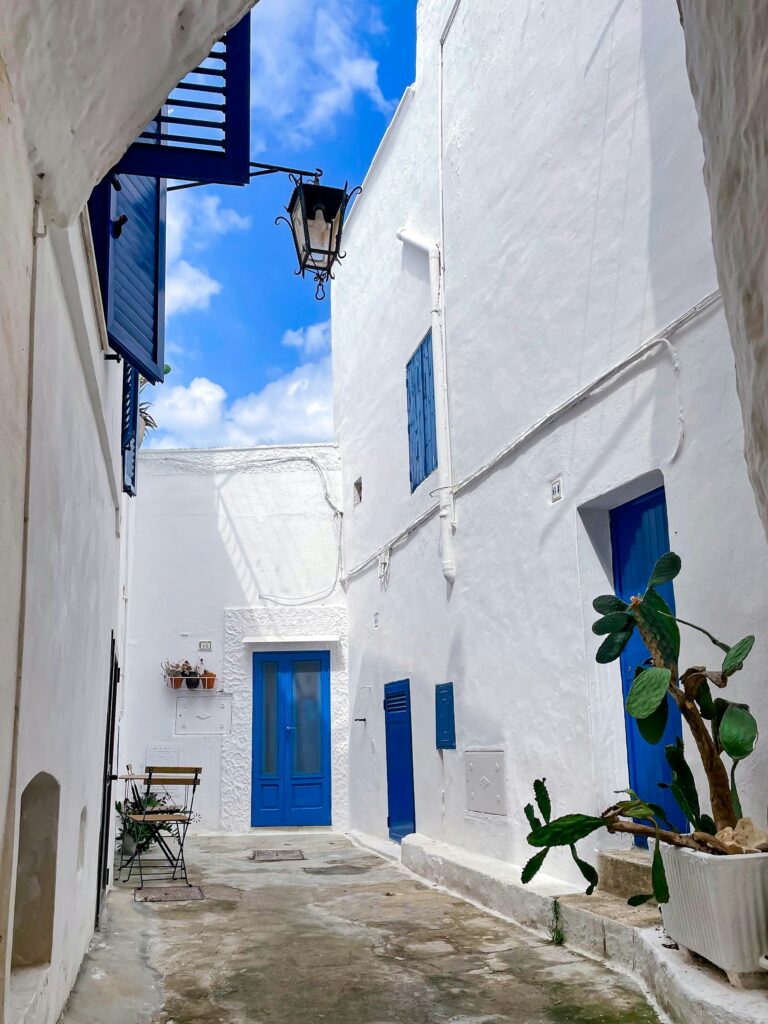
(Ostuni, Italy – Photo by José Jóvena)
Ostuni is known as the “White Town” because its lime-washed houses shine in the sun, especially late in the afternoon.
The maze-like lanes twist and climb, sometimes opening up to small terraces where you can look out across olive groves and spot the sea in the distance.
Locals used lime to keep their homes cool and clean, which is why the town feels so bright and unified. The olive oil around here is smooth and rich. Dipping bread into it with a few vegetables is really one of the best ways to settle in.
You’ll want to stop at the little cafes, try orecchiette pasta with tomatoes and greens, and just let the day slow down for a while. Puglia’s masseria farmhouses, scattered through the countryside near Ostuni, show how families once lived and worked close to the land.
Next, you can get into a quiet church if you find one open and look for old stone details. In summer evenings, breezes drift up from the coast and cool the streets.
You can find a terrace, order some cheese and olives, maybe a local drink, and just watch the town turn soft blue as night falls. There’s something about being wrapped in simple walls, clean lines, and open sky that makes you want to never leave…
Read next: 10 Best Things to See & Do in Puglia: Bucket List Ideas