

France is full of charming villages that feel like they were made for cottagecore lovers. Step away from the city rush, and you’ll find small towns that invite you to slow down and just wander.
Stone streets twist between stone cottages and timbered houses. Flower-filled balconies and quiet squares give these places a cozy, almost timeless vibe.
Vineyards, lavender fields, rivers, and forests often hug the edges of these villages. It’s hard not to feel the natural beauty in daily life.
History clings to the old walls, medieval castles, abbeys, fishing harbors, and rustic farmhouses. Every corner tells a story if you stop to notice.
Seasons bring their own magic. Spring bursts with blossoms and new leaves, while summer means festivals and outdoor cafés.
Autumn rolls in with golden hillsides and harvest celebrations. Winter? Markets glow with lights and a kind of quiet rhythm.
You can taste local food, visit artisan shops, and sometimes stumble into traditions that have lasted for generations. There’s a rhythm here that feels gentle, almost old-fashioned in the best way.
Taste wine in Alsace, walk through lavender in Provence, or watch boats drift by in Normandy. Each town offers something a little different for anyone craving inspiration or a slower pace.
Here’s a look at 10 beautiful small towns across France. Each one has its own story, its own seasonal charm, and plenty of reasons to enjoy it…
You’ll also love: 10 Charming Small Towns in Italy to Visit for Cottagecore Lovers
Keep in mind: Our articles may contain errors, despite our best efforts. So, do thorough research before deciding on a travel destination.
1. Eguisheim (Alsace)

This video will be loaded from YouTube.com, a third party. If you click "Play", you accept their terms of service, and their use of cookies.
Eguisheim is a small Alsatian village that feels like stepping into a book. Its streets wrap around the old castle of the Dukes of Alsace, built way back in the 8th century.
That circular layout gives the town a quirky charm you don’t see every day. Romans introduced winemaking here ages ago, and vineyards still hug the village on all sides.
This place is actually one of the oldest wine areas in Alsace. Half-timbered houses, painted in soft pastels, lean over cobbled lanes.
Flower boxes spill color everywhere in spring and summer. When autumn rolls in, the vines turn golden and the whole village glows.
Winter? The lights come on, Christmas markets show up, and the squares feel extra cozy. Eguisheim’s floral displays have won awards, and you can tell the locals take decorating seriously.
You’ll see blooms in nearly every corner. Visitors wander vineyard paths, sample crisp Alsace wines, and sometimes pop into artisan workshops for ceramics or woodwork.
A tarte flambée in a winstub hits the spot; it’s simple, but so satisfying. There are seasonal festivals for wine and harvest.
On quiet mornings, you might hear church bells echoing across the rooftops. Whether you’re strolling past old fountains, watching cats nap in sunny courtyards, or pausing at the castle ruins, Eguisheim moves at a gentle, timeless pace.
It’s got that soft, cottagecore vibe down to an art…
Read also: 10 Best Small Towns in the USA to Visit for Cottagecore Lovers
2. Colmar (Alsace)

This video will be loaded from YouTube.com, a third party. If you click "Play", you accept their terms of service, and their use of cookies.
Colmar’s canals and timbered houses really do make it feel like “Little Venice.” The town first popped up in records back in 823, under Emperor Louis the Pious.
It became an Imperial City in 1226. Later on, in 1354, Colmar joined the Decapole.
The Unterlinden Museum holds the famous Isenheim Altarpiece. That Renaissance masterpiece draws art lovers from all over; it’s worth the trip just for that.
Summer fills the air with roses and invites long walks along the canal. Autumn rolls in with wine festivals.
Winter? Colmar glows with one of France’s most famous Christmas markets. Spring is gentle here, with blossoms along the canals and a fresh breeze that makes you want to linger.
You can take a boat ride through the canals or sample kougelhopf cake, don’t skip that. Artisan shops line the streets, and the covered market brims with local cheeses and fruit.
Pastel houses reflect in the water. Painted signs with animals guide you through the winding lanes.
Colmar’s survived centuries of conflict, yet its medieval layout remains. You really do feel like you’re walking through history.
Maybe you’ll find a quiet bench by the canal, or end up tasting Alsace wine in a sunny square. Either way, Colmar wraps art, food, and charm into a place that somehow feels both lively and peaceful.
Read next: Visiting Colmar, France, at Christmas: 10 Experiences You Can’t Miss
3. Riquewihr (Alsace)
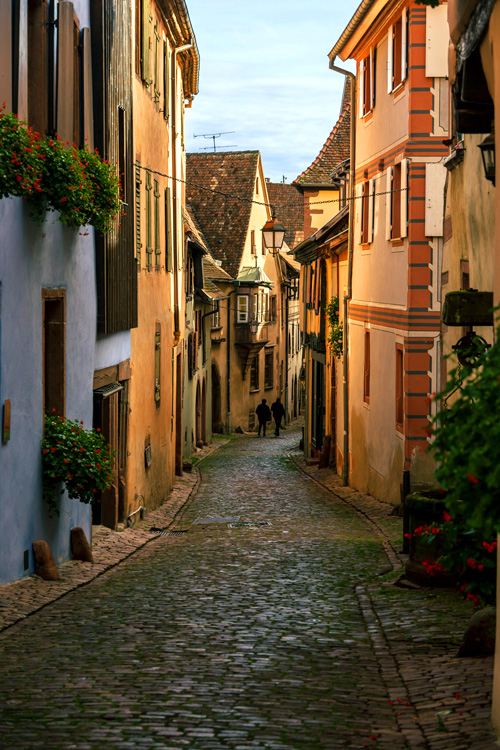
(Riquewihr, Alsace, France – Photo by Thomas Bormans)
Riquewihr sits between vineyards and forest, with streets lined by timbered houses in soft colors. First recorded in 1094, it was already known for vine-growing, and its prosperity peaked in the 16th century thanks to wine trade.
The Dolder Tower, built in 1291, still stands as part of its fortifications and houses a small museum. The town’s layout has hardly changed since the Renaissance, giving a strong sense of continuity.
Spring brings storks nesting nearby, summer fills the lanes with flowers, autumn offers grape harvests, and winter lights up the streets with festive decorations.
Visitors can walk medieval lanes, taste Riesling, and enjoy hearty Alsace dishes like baeckeoffe. Artisan shops sell local crafts, and courtyards hide carved stone doorways worth exploring.
The surrounding hills turn soft green and gold, and paths along the old walls give views of vineyards curving around town.
Whether you’re sipping wine, listening to church bells, or wandering cobblestones, Riquewihr feels like a living museum of Alsace’s cottagecore spirit!
4. Gordes (Provence)
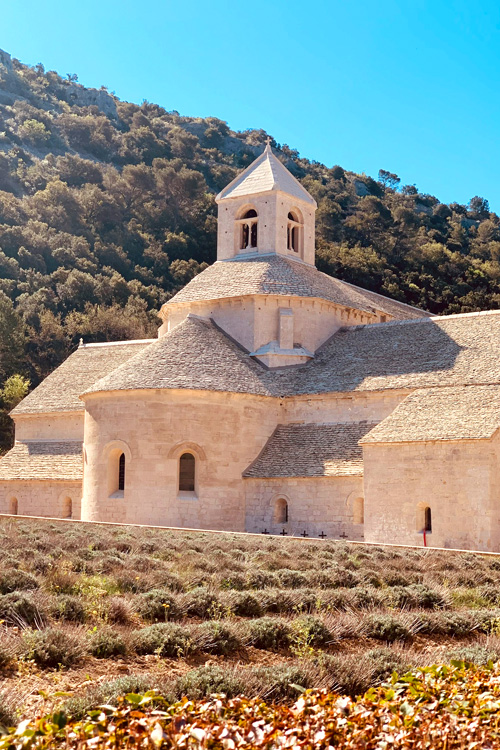
(Abbaye de Sénanque, Gordes, France – Photo by Thibault Ludwikowski)
Gordes rises from a rocky hill like a village carved from stone, with terraced homes and narrow lanes twisting toward small squares.
Developed around a fortified castle in the 11th century, it became a stronghold during the Middle Ages and later a hub for Resistance fighters in WWII.
A short walk takes you to the Village des Bories, stone huts built without mortar that show an old way of rural life. Lavender blooms in June and July, filling the air with fragrance, while autumn brings olive harvests and golden light across the valley.
Winter is calm and quiet, and spring offers fresh greenery and wildflowers. Visitors can explore vaulted cellars under Saint-Firmin church, shop for soaps and linens, and enjoy Provençal food like tapenade with bread.
The streets echo softly under your steps in the morning, and cicadas sing in the evening. Whether you’re watching shadows move across the valley or pausing at a fountain, Gordes offers timeless beauty and a gentle pace that feels deeply cottagecore.
Don’t miss: Autumn in Provence: 12 Breathtaking Places You Should Visit
5. Saint-Cirq-Lapopie (Occitanie)
Saint-Cirq-Lapopie clings to a cliff above the Lot River, with steep lanes and houses dating back to the 12th–15th centuries.
Surrealist writer André Breton lived here in the 20th century and famously said he never wanted to leave. In medieval times, the village had several “consuls” who managed trade and law, showing its past importance.
Summer brings art studios and river walks, autumn paints the cliffs in warm tones, spring is perfect for hiking trails along the Lot, and winter offers peaceful, misty mornings with fewer visitors.
You can browse pottery and woodcut studios, taste walnut cake or goat cheese with honey, and explore medieval stairways and terraces.
The path down to the river is shaded, and the calm flow makes a good spot to rest and watch boats glide.
Toward evening, the village gets quieter, and the river mirrors the cliffs in soft light. Saint-Cirq-Lapopie offers a mix of history, art, and nature that feels timeless.
6. Rochefort-en-Terre (Brittany)
Rochefort-en-Terre welcomes you with flower-filled streets, slate roofs, and carved wooden signs. Archaeological traces show people lived here over 2,000 years ago.
The Château de Rochefort-en-Terre was rebuilt on medieval foundations and restored in the early 1900s by American painter Alfred Klotz, who helped promote the village’s artistic life.
The town often wins national awards for its flower displays, showing how much care locals put into their streets.
Summer evenings glow with lanterns and music, autumn brings crisp air and colorful leaves, winter transforms the town with magical Christmas lights, and spring is a gentle time to enjoy gardens and blooming courtyards.
You can shop for handmade ceramics and textiles, enjoy kouign-amann pastries, sip Breton cider, and wander courtyards filled with blooms.
Small wells and old stone troughs remind you of daily life from earlier times. Whether you’re strolling past ivy-covered walls or pausing in a quiet square, Rochefort-en-Terre feels like a living place of cottagecore charm.
7. Barfleur (Normandy)
Barfleur is a fishing village with granite houses and a tidy harbor. Once a major Norman port, it played a role in history when William the Conqueror’s ship Mora sailed from here in 1066.
The harbor’s strong tides make boats rise and fall dramatically. Summer brings seafood festivals and fresh catches, autumn offers golden sunsets, winter is bracing but cozy, and spring offers calm walks along the coast with wildflowers blooming nearby.
You can walk to the lighthouse for long views of the coast, taste mussels or seafood soup, explore the gray-stone church, and watch boats resting on the sand at low tide.
Nets, ropes, and anchors line the streets, reminding you of the town’s fishing heritage. Whether you’re sitting on a bench listening to gulls or strolling at sunset when the water turns silver, Barfleur offers a simple, timeless charm. Great for cottagecore living…
8. Peillon (French Riviera)
Peillon is a medieval village built on a rocky spur, with narrow vaulted streets and stone houses. Its Church of Saint-Saviour contains Renaissance frescoes inside the walls.
The village is mostly pedestrian, so you move at a gentle pace, climbing steps and passing tiny arches. Olive trees frame the view, and terraced gardens hold herbs and figs.
Summer evenings hum with cicadas, autumn is olive harvest time, spring offers fresh greenery and wildflowers, and winter is quiet with crisp air and clear views.
You can climb narrow vaulted streets, taste socca (chickpea pancake), rest in shaded corners, and follow old mule paths through olive groves.
From the top lanes, amazing views stretch across hills toward the coast.
Don’t miss: 10 Best Towns in the South of France: Charming Destinations for Your Next Trip
9. Conques (Occitanie)
Conques grew around Sainte-Foy Abbey, founded in the 8th century by hermit Dadon. By the 9th century, it housed relics of Saint Faith and became a major pilgrimage stop on the Camino de Santiago.
The Romanesque tympanum over the church door shows detailed carvings of the Last Judgment, teaching stories to travelers who couldn’t read.
Inside, stained glass by artist Pierre Soulages sends soft light onto pillars and floors. Summer brings pilgrims and festivals, autumn colors the valley in gold, spring offers gentle walks along the stream, and winter is calm with misty mornings.
10. Honfleur (Normandy)
Honfleur gathers around its Vieux Bassin, a neat harbor lined with tall, narrow buildings in slate and stone. Dating back to the 11th century, Honfleur prospered through trade with North America from the 16th to 19th centuries.
The wooden church of Sainte-Catherine, built by shipbuilders, is the largest of its kind in France and feels like an upside-down ship hull inside.
The Lieutenancy building by the harbor, dating to the 18th century, reminds visitors of the town’s administrative past.
Honfleur inspired painters such as Eugène Boudin, who encouraged Claude Monet to capture changing light outdoors, making the town a cradle of Impressionism.
Seasonal highlights add charm: summer brings quays filled with outdoor cafés and music, autumn offers golden light beloved by artists, winter fills the town with festive markets and glowing decorations, and spring brings blossoms along the harbor with fresh sea breezes.
Activities include strolling the harbor, tasting galettes with cider, browsing art galleries, and visiting the Sainte-Catherine Church. A walk up to the viewpoint above town gives sweeping views of the estuary.
Be it enjoying seafood by the water or watching ropes knock against masts, Honfleur offers a timeless cottagecore rhythm…
Read also: What Makes these 10 Mountain Towns the Best in Europe? History, Great Views, & Adventure