
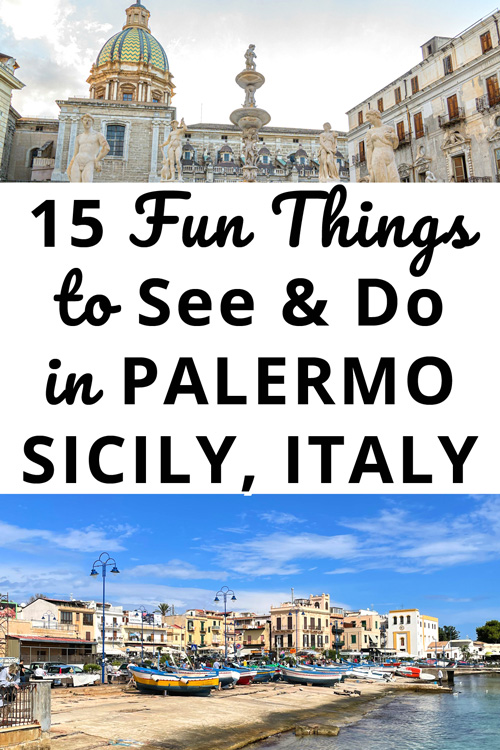
Palermo has a rich past and it feels like there’s a surprise waiting around every corner.
In this article, we’ll explore 15 fun and unique things to see and do in this Sicilian city: think centuries-old monuments, beautiful art, and a food scene that’s just plain welcoming.
Maybe you’ll visit a grand palace. Or a busy street market. You might even go to a show at a famous opera house.
Each activity will let you see both the old traditions and the modern style of the city. Ready? Let’s get started!
Read also: 15 Things To Do in Catania (Sicily, Italy): Ideas for Every Type of Traveler
1. Visit the Ballarò Street Market
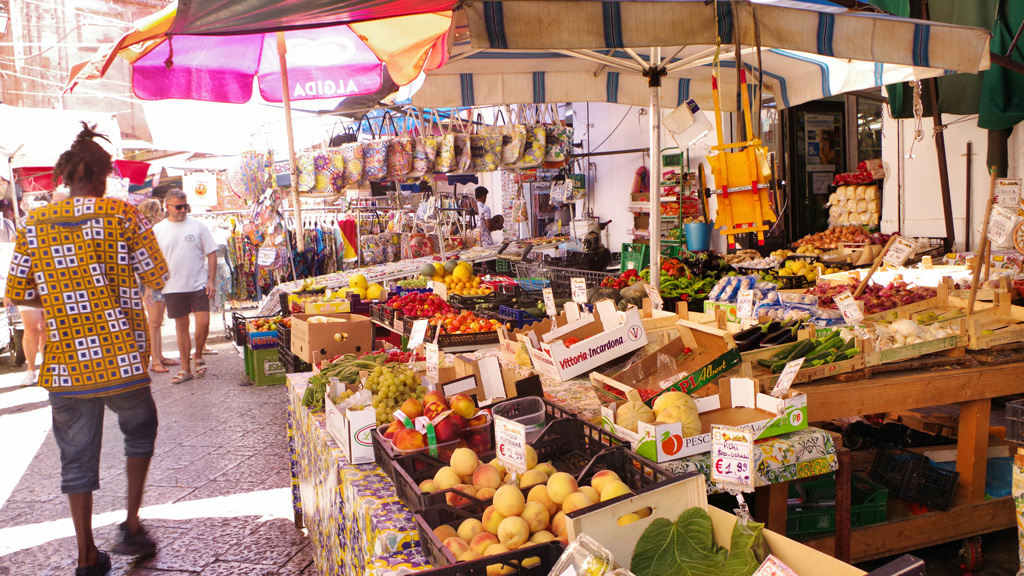
(Ballarò Street Market, Palermo, Sicily – Photo by Piermario Eva)
The Ballarò Street Market buzzes with energy in Palermo. Local vendors line the streets, selling fresh food and all sorts of curious treasures.
You’ll spot stands piled high with fruits, vegetables, and spices. The colors and smells hit you right away, it’s a feast for the senses.
As you wander through, the chatter of shoppers and sellers fills the air. It’s not just a market, it’s a slice of daily life, a peek into how the city really lives.
Must read: 15 Mistakes to Avoid on Your Sicily Travel Adventure
2. Visit the Piazza Marina

This video will be loaded from YouTube.com, a third party. If you click "Play", you accept their terms of service, and their use of cookies.
The Piazza Marina sits right in the heart of Palermo. It’s a square that’s got this great blend of history and nature.
There’s a massive Ficus Macrophylla tree at the center. This is hard to miss as it’s been part of the city for ages. It is more than 100 years old.
Old buildings line the space, along with some characteristic local shops. The whole area feels like a snapshot of daily Palermo life. People drop by to unwind, people-watch, or just relax.
Don’t miss: 10 Best Beach Towns and Cities in Sicily, Italy to Visit this Summer
3. Fontana Pretoria
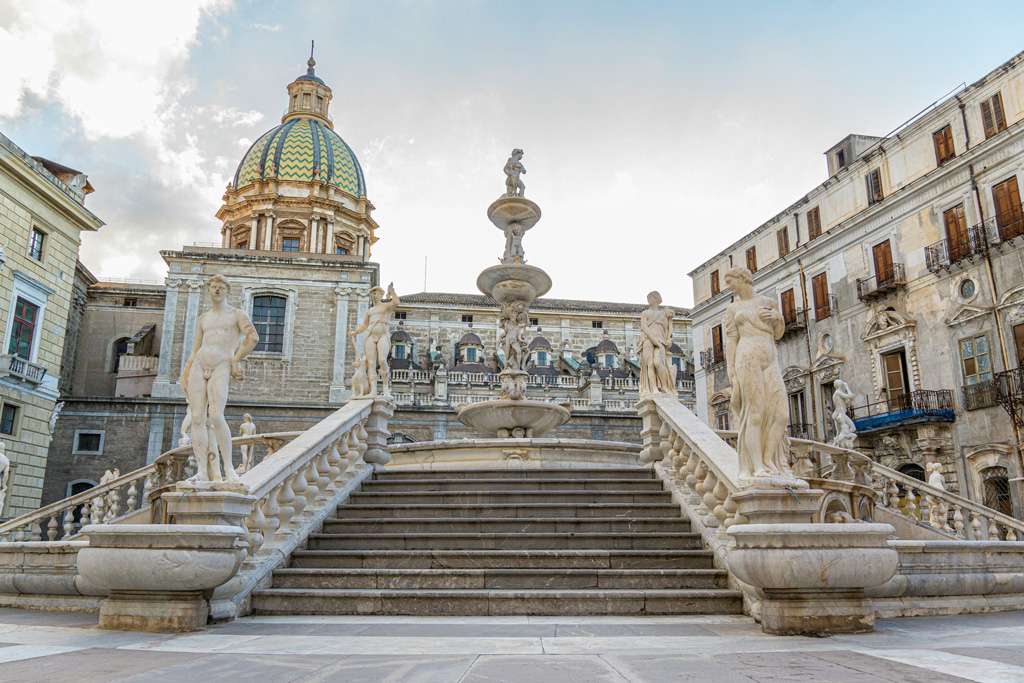
(Fontana Pretoria, Palermo, Sicily – Photo by VINCENZO INZONE)
Fontana Pretoria is an old fountain in Palermo built during the mid-1500s. It was first made in 1554 by the sculptor Francesco Camilliani in Florence for a palace garden. Then it was sold and moved to Palermo in 1574.
The fountain displays many carved statues that show figures from ancient myths and legends, reflecting the art and history of the Renaissance period.
4. Cripta dei Cappuccini

This video will be loaded from YouTube.com, a third party. If you click "Play", you accept their terms of service, and their use of cookies.
Cripta dei Cappuccini, or the Capuchin Catacombs, sits beneath Palermo. The Capuchin monks started it back in the late 1500s after their old cemetery ran out of space.
They used a special mummification process that naturally preserved bodies. Now, thousands of mummified people, still wearing their original clothes, rest in different sections, sorted by gender and social status.
It’s a strange, haunting place. If you’re curious about the customs, religion, and history of old Palermo, this site offers a glimpse that’s both fascinating and a bit unsettling.
5. See a Sicilian puppet show
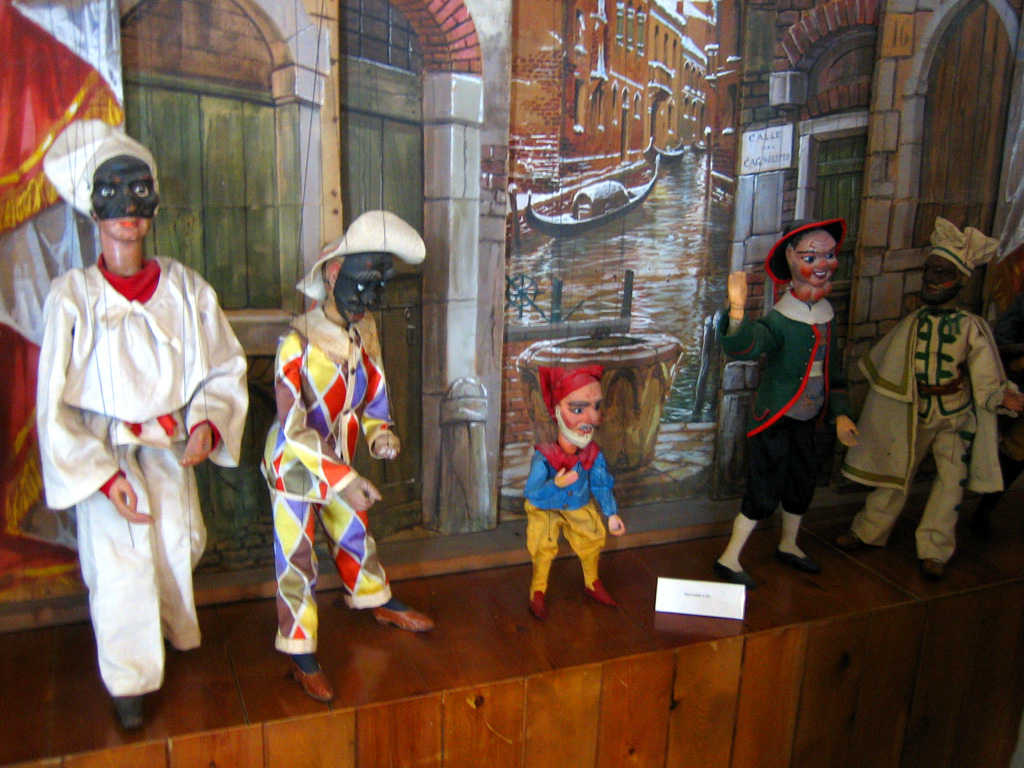
(International Museum of Puppets, Palermo, Sicily – Photo from flickr.com – CC BY 2.0)
The Sicilian puppet show, called the Opera dei Pupi, is very interesting. In these performances, hand-made puppets in tiny metal armor act out battles and adventures from old medieval legends.
Puppeteers move the figures with impressive skill. They speak in bold voices, making each scene feel alive and full of energy.
This art form started ages ago and is now part of Sicily’s history. It’s also recognized by UNESCO.
6. Palazzo Abatellis Regional Gallery
Palazzo Abatellis Regional Gallery is a museum in Palermo housed in a building from the 15th century. The architect, Matteo Carnilivari, went with a Gothic-Catalan style that still feels pretty unique today.
Originally, Francesco Abatellis, who was the port master of Sicily, called this place home. Now, though, it’s a museum that showcases art from the 12th to the 17th centuries.
You’ll find works by big names like Antonello da Messina.
7. Palace of the Normans and Palatine Chapel
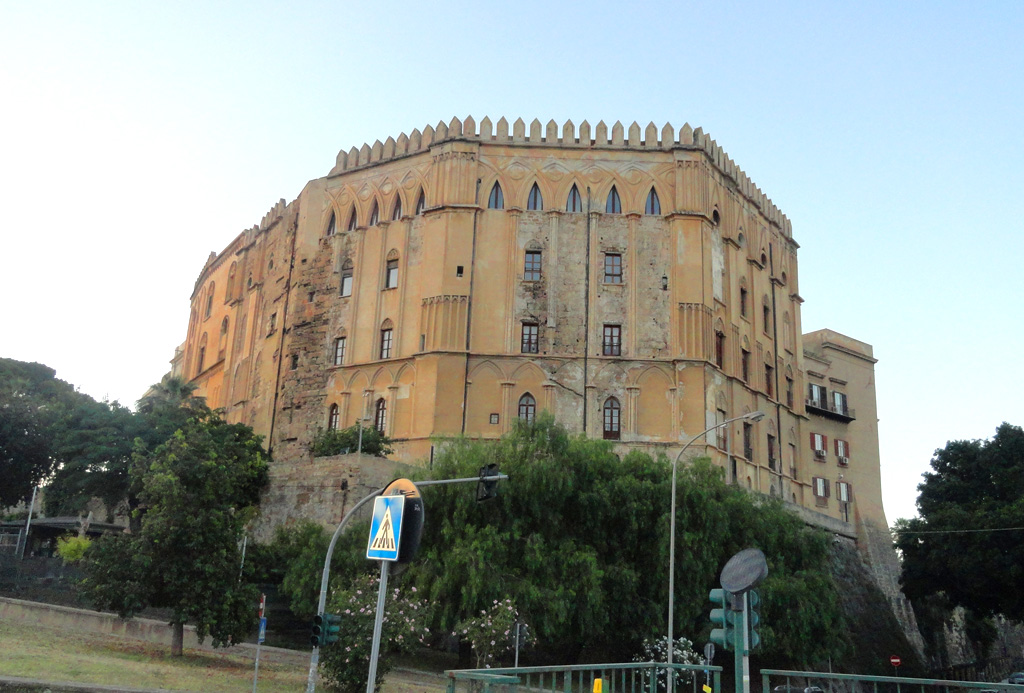
(Palace of the Normans, Palermo, Sicily – Photo from flickr.com – CC BY 2.0)
The Palace of the Normans and Palatine Chapel is an important historic site.
The Normans, in 1072, started work on the palace. They took what was basically an old fortress and turned it into a home fit for Sicily’s kings.
In 1130, King Roger II decided to build the Palatine Chapel for his own private worship. The chapel stands out for its stunning mosaics, which mix Byzantine, Arab, and Norman art into something unique.
Here you’ll see all these layers of art, culture, and history all in one place.
8. Mondello Beach
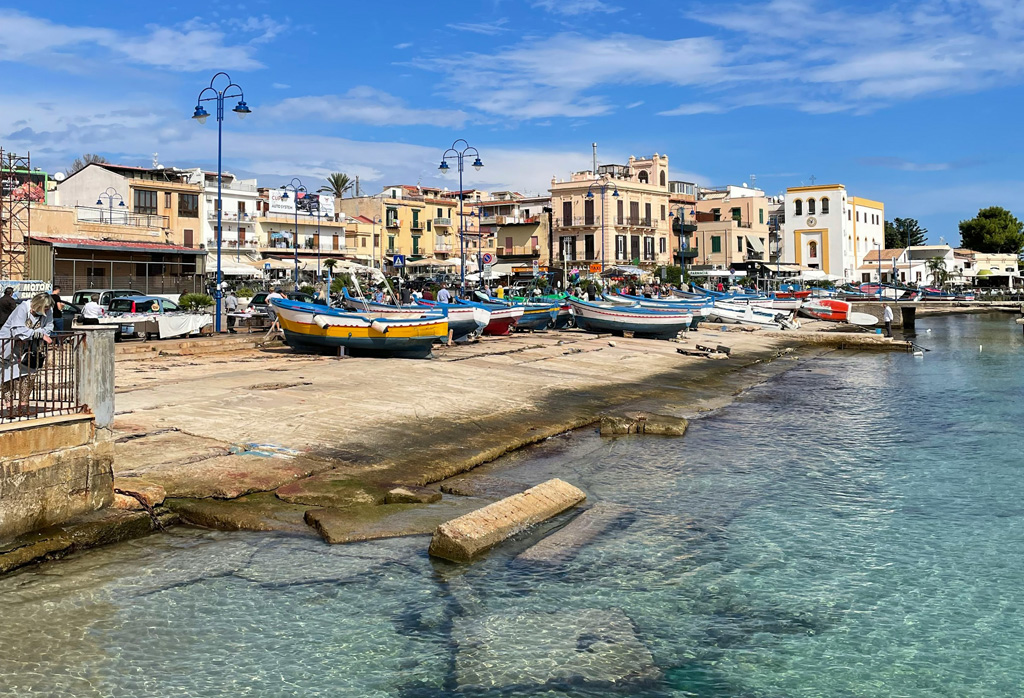
(Mondello Beach, Palermo – Photo by Nicolò Salinetti)
Mondello Beach sits along the coast of Palermo with its soft sand and clear water. The wide bay is framed by gentle hills, which just add to the landscape.
These days Mondello is a top pick for locals and travelers alike.
9. Monreale Cathedral
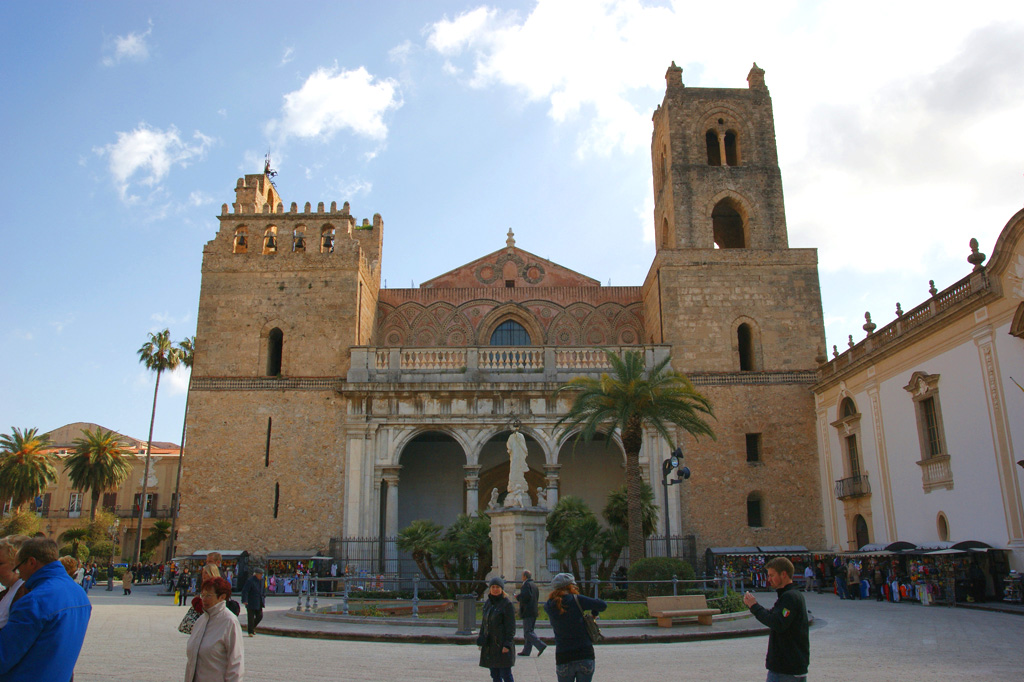
(Monreale Cathedral, Palermo, Sicily – Photo from flickr.com – CC BY 2.0)
Monreale Cathedral or Santa Maria Nuova Cathedral, sits just outside Palermo in Sicily. It’s a massive church with a story that stretches back centuries.
King William II of Sicily started its construction in 1172. He wanted to create a spectacular place of worship that really showed off the best of Norman art and design.
Finishing the cathedral took years. Step inside, and you’ll see walls blanketed in detailed mosaics that blend Byzantine, Arab, and Norman styles.
Gold and colored glass bring these decorations to life. They tell Bible stories and splash the whole place with color.
Monreale Cathedral has earned its spot as a UNESCO World Heritage Site. Tons of people drop by every year, curious about its history and eager to see the artwork.
10. Visit the Botanical Garden

This video will be loaded from YouTube.com, a third party. If you click "Play", you accept their terms of service, and their use of cookies.
The Botanical Garden is a pretty big place. It’s been around for more than 200 years.
Back in 1779, it started with just a tiny patch for studying medicinal plants. Then, in 1786, the garden moved to its current spot.
Now, in the garden you’ll find plants from all over the world.
There are greenhouses packed with tropical plants. Old trees line the paths, and there’s this massive Ficus macrophylla tree from 1845.
It’s really a peaceful spot if you want to wander, relax, or just geek out over how people have studied plants through the ages.
11. The Kalsa Neighborhood
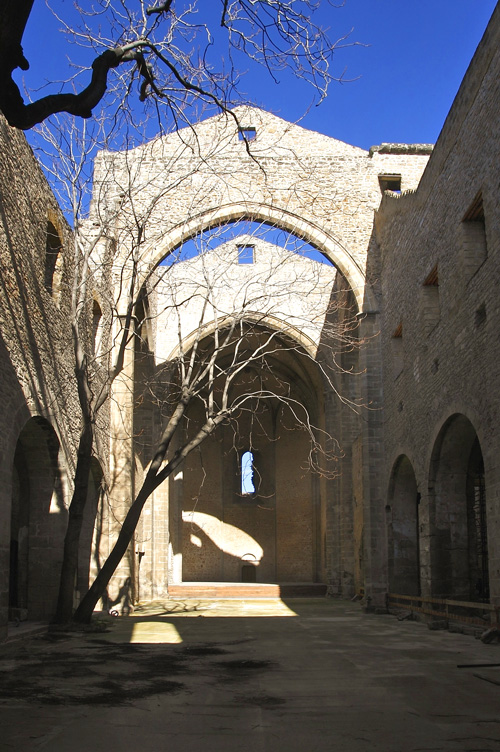
(Chiesa di Santa Maria dello Spasimo, Palermo (Kalsa), Sicily – Photo from flickr.com – CC BY-SA 2.0)
The Kalsa Neighborhood is one of the oldest parts of Palermo, with roots that go back to Arab times. Its name comes from an Arabic word that means “the chosen one.”
In this area, many old buildings and small streets show the history of different cultures, from Arab rulers to Norman and Italian kings.
The neighborhood was hard hit during WWII and abandoned, but later was rebuilt to mix its historic past with modern life.
12. Explore the Ancient Via Vittorio Emanuele (Càssaro)
Via Vittorio Emanuele, or Cassaro as some locals call it, is Palermo’s oldest street. Its story stretches all the way back to the Phoenicians, who first founded the city.
Through the years, different rulers, Arabs, Normans, Spaniards, left their own marks here.
These days, the road still ties together some of Palermo’s most famous sites. You’ll find the Royal Palace, the Cathedral, and plenty of other landmarks along its path.
13. Try Sicilian Granita and Brioche
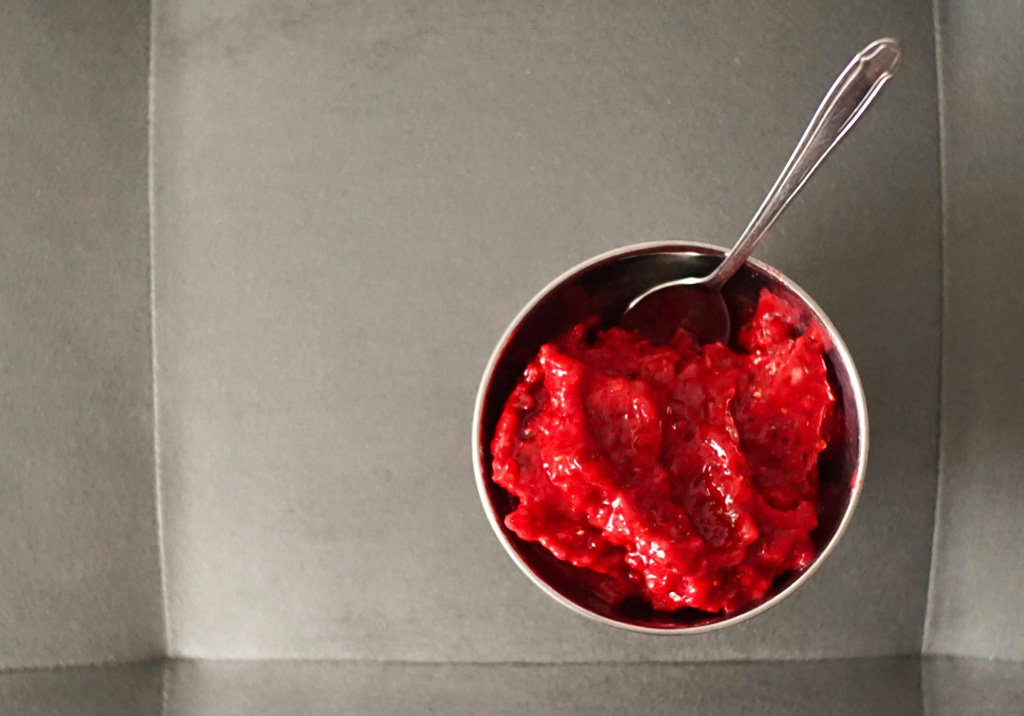
(Photo by Cristi Ursea)
Sicilian Granita and Brioche: what a pair! People in Palermo especially love them on hot days.
Granita is this sweet, icy dessert. It’s basically crushed ice mixed up with natural flavors like lemon, almond, or other fruit. Even though real Sicilian granita doesn’t have large ice crystals but a creamy texture thanks to a slow freezing process.
The best way to eat granita? With a warm, soft brioche. That’s a sweet, eggy pastry, and it somehow just works with the cool, flavored ice.
14. Try Local Street Food and Pastry
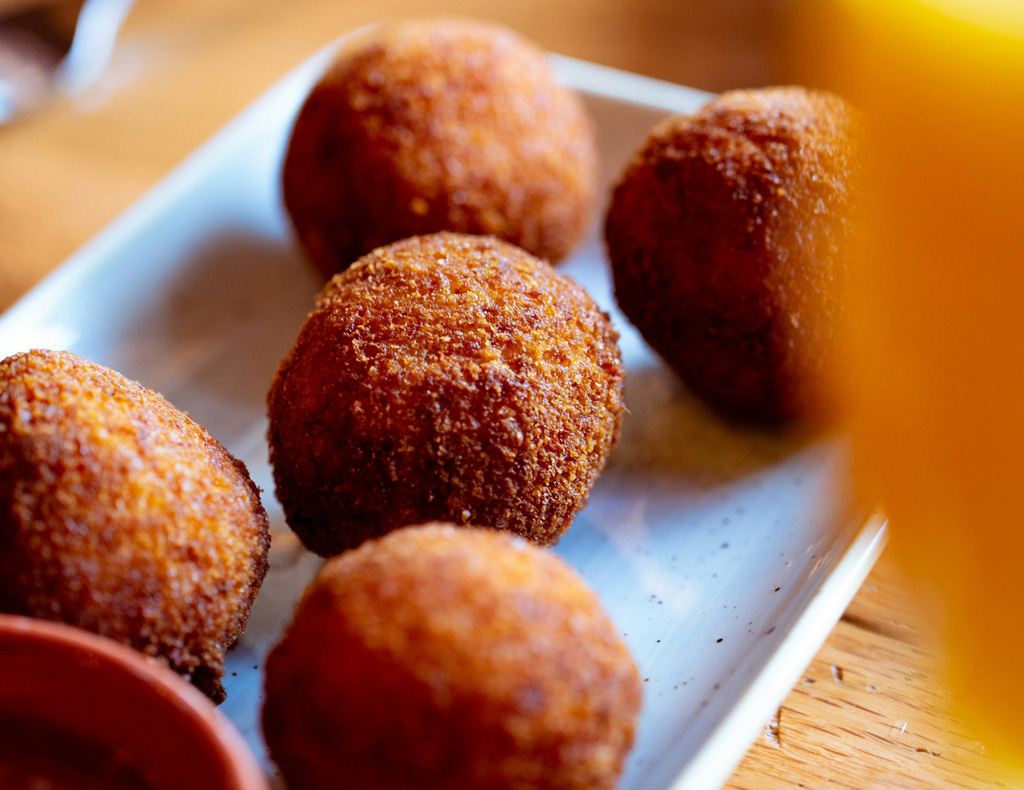
(Arancini – Photo by Clark Douglas)
The local street food and pastry scene here has a ton of delicious treats. On the busy streets, you’ll spot arancini and panelle which locals make with old family recipes.
Small bakeries nearby serve up sweet pastries too. Cannoli stuffed with fresh ricotta cream are a favorite.
It’s a tasty way to get a sense of Sicilian tradition, and really, who could resist?
15. Go to the Teatro Massimo
Teatro Massimo is one of the largest opera houses in Europe. Construction started in 1875. After plenty of years of effort, the doors finally opened in 1897.
The building shows off a neoclassical style, with clear nods to ancient Greek architecture. Inside, you’ll find more than 1,200 seats.
The theatre hosts operas, concerts, and dance performances all the time. It’s a big part of Palermo’s cultural scene and, if you ask me, you really shouldn’t miss it!