
Bologna greets you with arches that stretch for miles and warm brick everywhere.
You’ll see history and daily life mixing together. Students cross the piazzas, shopkeepers arrange fresh produce, and neighbors stop to chat under the porticoes.
The city doesn’t reveal everything at once. It sort of invites you to slow down, look closer, and maybe even wait a bit.
A hidden canal might show up behind a small window. Or you might stumble into a quiet church that opens into a wide courtyard.
Food’s part of the rhythm, too. Pasta gets rolled by hand and shared around tables. There’s just something real about it!
Bologna isn’t about rushing from one landmark to the next. It’s about letting the details shape your experience.
Each corner has its own story. Together, they create a picture of a city that feels alive.
If you’re curious about what makes Bologna so charming, the next 10 experiences will help guide you through its character and spirit. And, why not, maybe inspire your next Italian trip!
You’ll also love: Exploring Turin (Italy): 10 Best Things to Do & Experiences You Can’t Miss
Keep in mind: Our articles may contain errors, despite our best efforts. So, do thorough research before deciding on a travel destination.
1. Piazza Maggiore

This video will be loaded from YouTube.com, a third party. If you click "Play", you accept their terms of service, and their use of cookies.
Piazza Maggiore has been the heart of Bologna since the 13th century. This wide square, about 115 by 60 meters, is surrounded by some of the city’s most important buildings.
You’ll see the Palazzo del Podestà, Palazzo d’Accursio, Palazzo dei Banchi, and the Basilica di San Petronio all framing the space. For centuries, people gathered here for markets, festivals, and public meetings.
Even now, it feels like the city’s living room. You can just sit on the steps, get a coffee, and watch daily life take place…
Street musicians often play nearby. The square naturally draws both locals and visitors.
The architecture is a mix of medieval and Renaissance, which gives the piazza a textured character. In the evening, the lighting turns everything warm and inviting. Suddenly, a simple stroll feels magical…
From here, you can walk to other landmarks, side streets, or under the endless porticoes. Piazza Maggiore is where you pause, breathe, and really feel the pulse of Bologna.
Don’t miss: 10 Best Things to See & Do in Florence, Italy: Summer Travel Ideas
2. Fontana del Nettuno

This video will be loaded from YouTube.com, a third party. If you click "Play", you accept their terms of service, and their use of cookies.
The Neptune Fountain, or Fontana del Nettuno, stands right next to Piazza Maggiore. Commissioned in 1563 by Cardinal Legate Pier Donato Cesi, it was designed by the Flemish sculptor Giambologna and finished in 1566.
This bronze statue of Neptune, surrounded by sea nymphs and cherubs, was meant to show off papal power and the reach of the Catholic Church. Locals just call it “Il Gigante” because it’s really huge.
The fountain quickly turned into a favorite meeting spot and still draws people in today. Visitors pause to check out the details, from the flowing water to the expressive figures at the base.
In the afternoon, sunlight really makes the bronze pop. By evening, the area feels calm, almost dreamy.
There’s a funny student tradition too: supposedly, if you walk counter-clockwise around Neptune twice before exams, you’ll get good luck. Maybe it works, maybe not, but you’ll see people trying it.
Whether you snap a quick photo or just hang out on the steps for a while, the Fontana del Nettuno feels like a living piece of Renaissance art right in the heart of Bologna.
Read also: 10 Best Things to Do in Rome (Italy) in Winter & during the Christmas Holidays
3. Piazza Santo Stefano
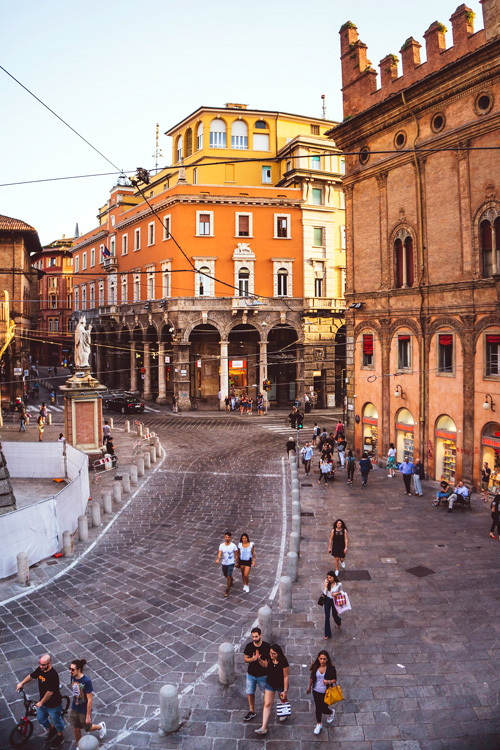
Piazza Santo Stefano is one of Bologna’s most atmospheric squares. Unlike the formal Piazza Maggiore, this triangular space feels more intimate and relaxed.
People often call it Piazza delle Sette Chiese, since it leads right to the Basilica of Santo Stefano, a cluster of old religious buildings that once numbered seven. The cobblestones, porticoes, and historic facades just show a kind of timelessness.
Locals gather here for small markets, concerts, and cultural events, especially in summer. Students and travelers love to sit on the steps and enjoy the view.
In the evening, the warm lighting gives the whole place a special charm. If you get into the Santo Stefano complex, you’ll find courtyards, cloisters, and chapels with stories from Bologna’s early Christian days.
The piazza itself is a great place to slow down, take a few pictures, or just enjoy a quieter side of the city. It’s usually less crowded than Piazza Maggiore, but it’s just as rich in atmosphere, maybe even more so, depending on your mood.
Read next: 15 Best Things To Do in Milan (Italy) in Summer
(Bologna, Italy – Photo by Salmen Bejaoui)
4. La Piccola Venezia
La Piccola Venezia, or “Little Venice,” is one of Bologna’s hidden surprises.
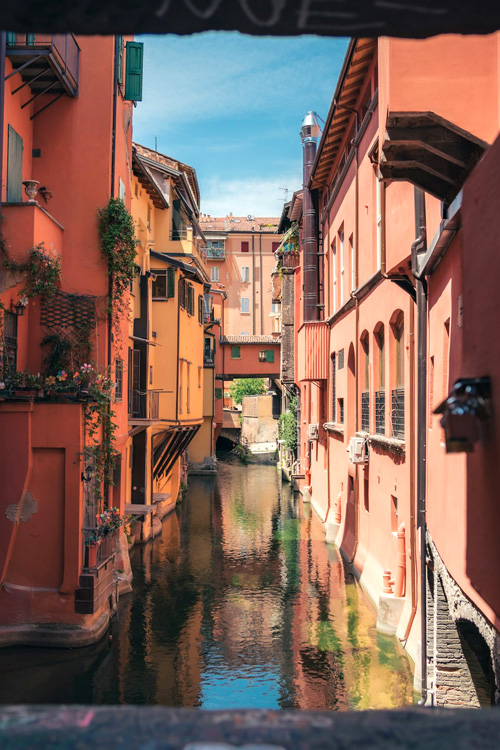
On Via Piella, you’ll find a small window, locals call it the Finestrella di Via Piella, that opens onto the Canale delle Moline.
This canal is one of the few you can still see in the city. It’s a reminder of when Bologna had a web of waterways for transport and powering mills.
Most canals are covered now, so catching this glimpse feels like stumbling onto a secret. The view shows colorful houses rising straight from the water, and it’s not what most people expect in Bologna.
It’s a quick stop, but it sticks with you. People love snapping photos through the window, and some walk the nearby streets, hoping to see more of the old canals.
You’ll also see a few small cafes and shops nearby, perfect for a break after your visit. La Piccola Venezia isn’t a headline attraction, but it adds a charming twist to your walk through the city.
Bologna still hides surprises in its quieter corners, and this is one of those little details that make exploring here so rewarding.
Don’t miss: 9 Mistakes to Avoid in Italy for a Stress-Free Adventure
(Little Venice, Bologna, Italy – Photo by Daniel Sessler)
5. Porta Maggiore
Porta Maggiore, or Porta Mazzini if you prefer, is one of the gates built during the late 13th century. Back then, Bologna was wrapping itself in its third circle of walls.
This gate marked the eastern entrance to the city. Travelers followed the Via Emilia, that old Roman road stretching from Bologna to Rimini.
Over the centuries, people have changed and reshaped the gate. Still, its stone arches and towers hang onto their history.
If you stand beneath it, you might picture merchants and pilgrims hustling through, heading in or out of Bologna.
Now, Porta Maggiore sits amid busy, modern traffic. Yet, it stubbornly keeps its place as a reminder of Bologna’s medieval defenses.
It’s also a decent starting point if you want to go into the neighborhoods outside the historic center. Those areas offer quieter streets and some local shops.
For anyone curious about the city’s story, Porta Maggiore is a meaningful stop. It connects you to Bologna’s past in a direct way.
Read also: Looking for Authentic Italy? Start with These 25 Enchanting Small Towns & Villages
6. Basilica di San Petronio
The Basilica di San Petronio looms over Piazza Maggiore with its massive, unfinished facade. Construction started in 1390, aiming for a church even bigger than St. Peter’s in Rome.
That goal? Never quite happened. The lower facade glows with marble, but the upper half is just bare brick.
Step inside, and you’re met with a vast Gothic interior. Tall columns rise up, and there are 22 chapels packed with art.
One detail that always grabs attention is the meridian line, built in 1655 by astronomer Giovanni Domenico Cassini. It’s actually the longest indoor meridian in the world and was used to measure the solar year with surprising accuracy.
The basilica is dedicated to San Petronio, Bologna’s patron saint. It’s still a living and breathing place of worship.
People often walk in and just stop, a bit awestruck by its scale. If you care about history, science, or architecture, San Petronio’s got layers to explore right in the center of Bologna.
Read next: 27 Best Small Towns in Tuscany, Italy, that You Should Visit
7. Sanctuary of San Luca
The Sanctuary of the Madonna di San Luca is located on Colle della Guardia, a hill that looks out over Bologna. People have made pilgrimages here for centuries, though the current basilica dates back to the 18th century.
What really sets this place apart is the portico leading up to it. That’s a covered walkway stretching 3.8 kilometers (2,36 miles), winding all the way uphill with 666 arches. It’s the longest portico in the world.
Pilgrims and curious visitors start their walk near Porta Saragozza. The path snakes upward, passing little chapels and offering glimpses of the city and green countryside.
Once you reach the top, the sanctuary feels peaceful and a bit removed from the bustle below. You get these amazing views of Bologna’s terracotta rooftops and the rolling hills beyond.
Inside, the church keeps a cherished icon of the Virgin Mary. If you’re not up for the walk, there’s a bus or even a tourist train that’ll take you up, but walking the portico sticks with you.
There’s just something about the history, devotion, and scenery here that makes San Luca stand out.
8. Palazzo dei Banchi
Palazzo dei Banchi closes the eastern side of Piazza Maggiore with its elegant Renaissance facade. Built between 1565 and 1568, it was designed by the architect Jacopo Barozzi da Vignola.
Commissioners wanted to hide the irregular medieval alleys behind it. They hoped to give the square a more harmonious appearance.
Its name comes from the money changers and bankers who once worked under its porticoes. Today, the palazzo still frames the square beautifully.
Its arches lead into the narrow streets of the Quadrilatero, Bologna’s historic market district. Walking under its portico, you can really feel the shift from the grand open space of Piazza Maggiore to the busy lanes packed with food shops, cafes, and stalls.
The building itself isn’t open to the public. Still, you can’t miss its role in shaping the square’s character.
9. The Porticoes of Bologna
Bologna is famous for its porticoes. They stretch for about 62 kilometers (38,5 miles) all across the city.
These covered walkways, held up by arches and columns, first appeared back in the 12th century. Over time, people expanded them, adding new stretches as the city grew.
The porticoes aren’t just for show. They’re practical too. They offer shelter from the sun and rain and create space for shops, cafes, and the occasional gathering spot.
In 2021, UNESCO recognized the porticoes as a World Heritage Site. That really highlights their cultural and architectural value.
Each section feels a bit different. Some are simple and narrow, while others are wide and dressed up with frescoes or fancy carved capitals.
Walking under the porticoes is one of the best ways to enjoy Bologna. They link up the city’s landmarks and neighborhoods in a kind of endless path.
They even lead all the way to the Sanctuary of San Luca. So, in a way, they’re woven into the city’s spiritual life too.
10. The Bolognese cuisine
Bologna’s food comes straight from local traditions and a real love of careful and simple cooking. Tagliatelle al ragù is a great place to start. Fresh egg pasta tangled up with a slow-cooked meat sauce.
There’s also tortellini in brodo. These tiny filled pastas float in clear broth, often warming up Sunday lunches or holiday tables.
Mortadella, that smooth, flavorful cold cut, is made right in Bologna. Grab a few slices with bread or try some cubes with a splash of balsamic.
Many trattorias serve lasagne verdi too. Layers of fresh pasta, ragù, and creamy béchamel stacked together…
Walk through markets like the Quadrilatero and you’ll see pasta being rolled out by hand. You can taste cheeses, cured meats, and all kinds of bread right there.
Pair your meal with a local wine. Lambrusco is lightly sparkling and fruity, while Pignoletto brings a dry, crisp white from the hills outside town.
For dessert? Simple cakes or a scoop of gelato from a neighborhood shop usually hit the spot.
If you’re curious about cooking, you’ll find short pasta-making classes that cover the basics. Mixing dough, rolling, shaping, and a few laughs along the way…
Eating in Bologna is about sharing plates, noticing textures, aromas, and maybe even a second glass of wine.
Ask the staff what’s good. Take their advice, try something new, and let yourself enjoy a meal that’s as relaxed and genuine as the city itself.
Read next: 10 Best Things To See & Do in Sicily, Italy: Don’t Miss These!