
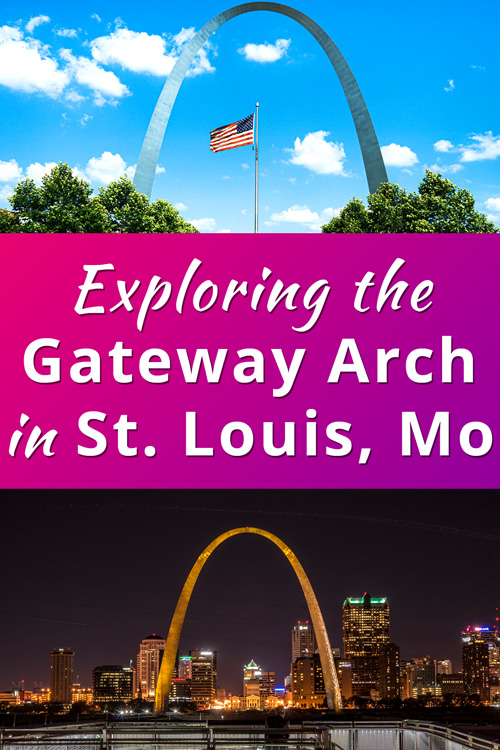
The Gateway Arch in St. Louis, Missouri, is one of America’s most recognizable monuments. Still, not many folks actually know what hides inside this architectural marvel.
Beyond its shiny, iconic exterior, there’s a fascinating tram system tucked away. The arch also houses a museum and an observation deck with views that stretch out over the Mississippi River.
Let’s dig into how they built this thing, what you’ll find inside, and what it’s really like to visit the world’s tallest arch.
You’ll also love: 10 Best Things to See & Do in St. Louis, Missouri: Fun Ideas for Your Bucket List
The Gateway Arch: Facts and Figures

This video will be loaded from YouTube.com, a third party. If you click "Play", you accept their terms of service, and their use of cookies.
World’s Tallest Arch
The Gateway Arch reaches an impressive height of 192 meters (630 feet), making it the world’s tallest arch. It joins the ranks of other iconic structures like the Eiffel Tower, Space Needle, and Big Ben as a defining symbol of its city.
Over one million visitors come to experience the arch each year, making it one of Missouri’s top tourist destinations.
Unique Architectural Design
The arch features an inverted catenary curve design: the same shape a chain makes when hanging, but flipped upside down.
This specific shape is ideal for supporting the structure’s own weight without requiring internal support systems.
The arch maintains equal height and width measurements of 192 meters, creating its perfectly symmetrical appearance.
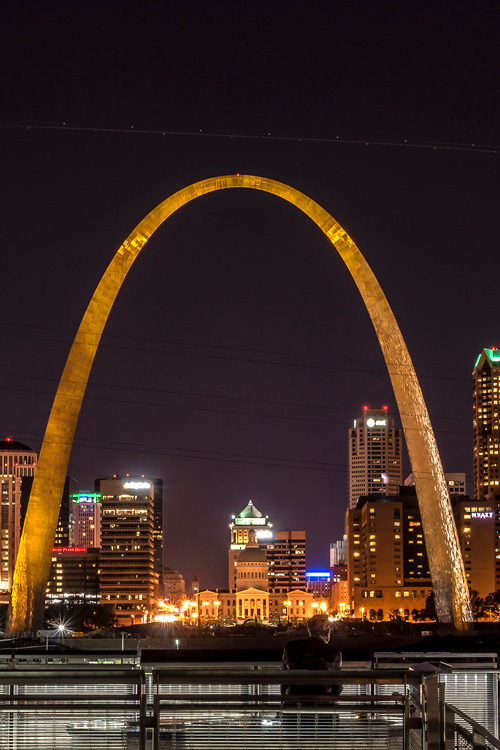
(Gateway Arch, St. Louis, Missouri, USA by Bryan Werner, CC BY 2.0)
Engineering Resilience
The Gateway Arch was engineered to withstand extreme conditions:
- Earthquake-resistant design,
- Lightning strike protection,
- Wind resistance: allowing up to 46 centimeters of sway in high winds.
Don’t miss: These Are the 12 Best Things to Do in Kansas City, Missouri: Barbecue, Jazz, & Fountains
The Historical Significance: Gateway to the West
St. Louis and Westward Expansion
Understanding what’s inside the Gateway Arch requires understanding why it was built. The monument commemorates St. Louis’s crucial role in American westward expansion during the 18th and 19th centuries.
Founded in 1764, St. Louis became the final major supply stop for pioneers heading west across the plains.
This strategic location earned the city its nickname as the “Gateway to the West,” which directly inspired the monument’s name and purpose.
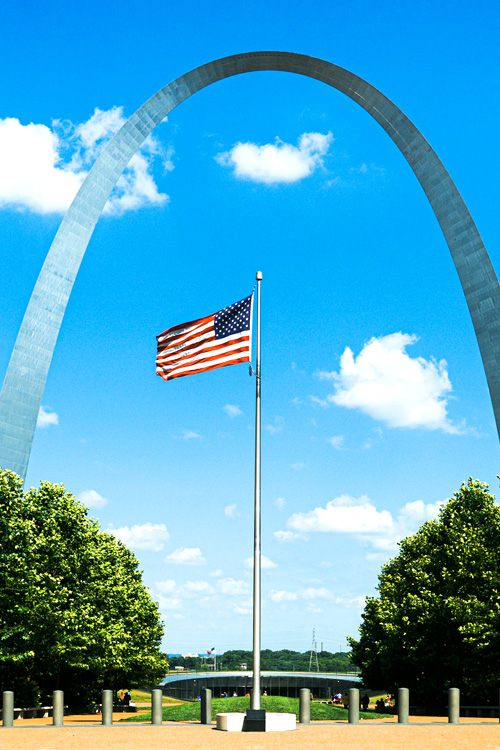
(Gateway Arch, St. Louis, Missouri, USA – Photo by Chris Hardy)
Design Competition and Eero Saarinen
In the 1940s, a design competition was held to create a monument honoring the legacy of westward expansion.
Out of 172 entries, Finnish-American architect Eero Saarinen’s innovative arch design was selected. His vision was the most unique submission, proposing a structure that would literally represent a gateway.
Tragically, Saarinen passed away before construction began, but he remains honored today as the visionary behind this American icon.
Read also: 10 Best Christmas Things to Do in Branson, Missouri: My Favorites
Construction of the Gateway Arch (1963-1965)
Revolutionary Orthotropic Design
The Gateway Arch features an orthotropic design, meaning the exterior metal skin IS the structure: there’s no internal supporting framework.
This was revolutionary for its time and different from typical buildings that have internal skeletons covered by outer layers.
Foundation and Preparation
Construction began in 1961 with excavation reaching 18 meters deep: approximately six stories underground.
Workers laid concrete and steel tensioning rods in multiple layers to create a solid foundation capable of supporting the massive structure above.
Building from Both Sides
The construction strategy involved building simultaneously from both legs upward until meeting in the middle.
The arch consists of 142 equilateral triangular sections, numbered as “stations” from the base (station 71) to the top (station zero).
Each triangular section featured:
- Stainless steel panels on the exterior
- Carbon steel panels on the interior
- Reinforced concrete between the layers
The metalwork was manufactured in Pittsburgh, Pennsylvania, steel mills and shipped by rail to St. Louis for on-site assembly and welding.
The Creeper Derrick Innovation
After the first 22 meters, traditional cranes could no longer reach the construction height. Engineers designed the Creeper Derrick: a mobile crane system that traveled up tracks mounted on the arch legs themselves.
This innovative solution allowed construction to continue as the Derrick could:
- Lift new triangular sections into place
- Move upward as the arch grew taller
- Maintain level platforms despite the arch’s curve
The Pittsburgh-Des Moines Steel Company (PDM) operated these revolutionary construction platforms.
The Stabilizing Truss
Halfway through construction, the two legs required additional support to prevent inward collapse. A stabilizing truss was installed between the legs, allowing construction to continue for another 21 pieces on each side.
The Final Keystone Piece
On October 28, 1965, after two and a half years of construction, only one piece remained: the keystone.
Thousands gathered to witness this historic moment, but there was a problem: the gap was less than a meter wide, and the keystone needed almost two and a half meters to fit.
The solution involved:
- Spraying water on the sun-heated south leg to cool and contract the steel
- Using hydraulic jacks to separate the legs
- Carefully inserting and welding the keystone
The $13 million project (nearly $100 million in 2024 dollars) was completed. The stabilizing truss was removed, and the arch successfully supported its own weight.
Read next: 15 Best Things to Do & Places to See in Missouri: Your Ultimate Bucket List
Inside the Gateway Arch: The Tram System
Underground Museum Experience
Before ascending to the top, visitors explore the museum underneath the arch, which details the history of westward expansion and the arch’s construction. This underground facility provides context for the monument’s significance in American history.
The Unique Tram Ride
The most remarkable feature inside the Gateway Arch is its innovative tram system. This specialized transportation system carries passengers from ground level all the way to the observation deck at the summit: 192 meters above the Mississippi River.
The tram system was specifically designed to navigate the arch’s curved interior, making it unlike any other elevator or tram system in the world.
Must read: These Are 12 of the Best Small Towns in Missouri for a Charming Getaway
The Observation Deck at the Top
Once visitors complete the tram journey, they reach the observation deck positioned at the arch’s peak. From this vantage point, visitors can see:
- Downtown St. Louis to the west
- The Mississippi River directly below
- Illinois across the river to the east
- Panoramic views spanning miles in every direction
Location and Visitor Information
The Gateway Arch sits along the Mississippi River in St. Louis, Missouri, right at the border between Missouri and Illinois.
Its prominent position on the riverfront makes it visible from miles away and serves as the focal point of the Jefferson National Expansion Memorial park.
Conclusion: An American Icon
The Gateway Arch represents an extraordinary achievement in architecture, engineering, and historical commemoration.
What’s inside the Gateway Arch, the innovative tram system, educational museum, and breathtaking observation deck, enhances the experience of this structural masterpiece.
From its inverted catenary design to its revolutionary construction methods, the arch continues to inspire visitors and stands as a testament to American innovation and the pioneering spirit of westward expansion.
Whether you’re interested in architecture, history, or simply experiencing one of America’s most unique monuments, the Gateway Arch offers an unforgettable journey both inside and out.
Read next: 100+ Fun & Interesting Facts about the USA: Freedom, Baseball, & Apple Pie