

When you think of great food destinations, big cities probably pop into your head first. But small towns across the United States are serving up flavors that can surprise you!
Take cherry pies in Michigan or chile stews in New Mexico. These places prove that local traditions and fresh ingredients can create meals you’ll remember.
Each town has its own story. History, culture, and the land all shape what ends up on the table.
Maybe you’re walking through a historic plaza. Or you’re strolling along a waterfront, or just poking around a quiet village street. Either way, you’ll stumble onto dishes that feel both comforting and a little unexpected.
Here’s a look at 10 small towns where food isn’t just a meal, but it’s part of the whole experience. These spots let travelers taste America’s roots in places packed with charm and character…
Don’t miss: Where to Go in the USA: 13 Destination Ideas Month by Month (+ Cheat Sheet)
Keep in mind: Our articles may contain errors, despite our best efforts. So, do thorough research before deciding on a travel destination.
1. Oxford, Mississippi

This video will be loaded from YouTube.com, a third party. If you click "Play", you accept their terms of service, and their use of cookies.
Oxford blends comforting Southern cooking with fresh, chef-led ideas that stay close to local farms. You’ll find fried chicken, catfish, shrimp and grits, biscuits, and lots of greens.
There are also seasonal salads and some unexpectedly creative sides. The Square makes tasting everything easy with bakeries, cafes, and cozy restaurants all sitting within a short walk.
You can snack through the afternoon without much planning. Maybe grab a biscuit sandwich, a slice of pie, or barbecue with simple fixings.
Here’s a neat bit of history: William Faulkner bought Rowan Oak in 1930 and lived there for decades. The house itself was built way back in 1844.
The University of Mississippi was chartered in 1844 and opened in 1848. It’s shaped the town’s arts and food culture in all sorts of ways.
Game days bring tailgate flavors to the streets. In spring and fall, porch meals with tea or lemonade just feel right.
Whether you go for something hearty or light, Oxford’s food feels welcoming and relaxed. The flavors reflect Mississippi’s fields and kitchens: honest, warm, and just a little bit nostalgic.
Read also: 10 American Towns that Feel like Europe, Without the Jet Lag
2. Lewisburg, West Virginia

This video will be loaded from YouTube.com, a third party. If you click "Play", you accept their terms of service, and their use of cookies.
Lewisburg is a small Appalachian town where comfort food meets careful craft. You’ll find soups, stews, cornbread, smoked meats, and garden vegetables, plus fresh-baked breads and simple pastries.
Downtown is easy to walk, with cafes and bistros serving seasonal plates and local cheeses. Order trout when it’s in season, or try biscuits with honey and butter for a mellow bite.
Food festivals and street events often include regional snacks, from kettle corn to barbecue.
Two local facts add color: Carnegie Hall was built in 1902 with a donation from Andrew Carnegie and still hosts performances; and the Lewisburg Historic District was listed on the National Register of Historic Places in 1978, with buildings spanning more than two centuries.
It’s the kind of place where a casual lunch turns into a walk through historic streets. Grab a cookie or slice of cake for a sweet ending, then settle into a patio for a quiet evening meal.
Read next: 10 Cute Small Towns in West Virginia to Visit for History, Landscapes, & Charm
3. Healdsburg, California

(Costeaux French Bakery, 417 Healdsburg Avenue, Healdsburg, CA, USA – Photo by Brett Wharton)
Healdsburg sits at the meeting point of Russian River Valley, Dry Creek Valley, and Alexander Valley, so food here naturally leans toward farm-grown and seasonal.
Look for wood-fired vegetables, grilled meats, local cheeses, and seafood from nearby coasts. Bakeries, tasting rooms, and small restaurants cluster around the town plaza, making a relaxed food crawl simple.
Share small plates like roasted peppers, fresh salads, and cured fish, then enjoy gelato or a cookie.
A couple of facts from the town’s story: Healdsburg was established in 1857 by Harmon Heald and incorporated in 1867; and over the 20th century, the area shifted from orchards and prunes to vineyards.
Summer brings tomatoes, peaches, and corn; fall leans into mushrooms and squash; winter highlights citrus and hearty greens.
Whether you prefer a picnic or a sit-down dinner, Healdsburg’s food feels connected to the land, with calm patios and walkable streets.
You’ll also love: 17 Cute, Small Towns in California You Have to See
4. Traverse City, Michigan
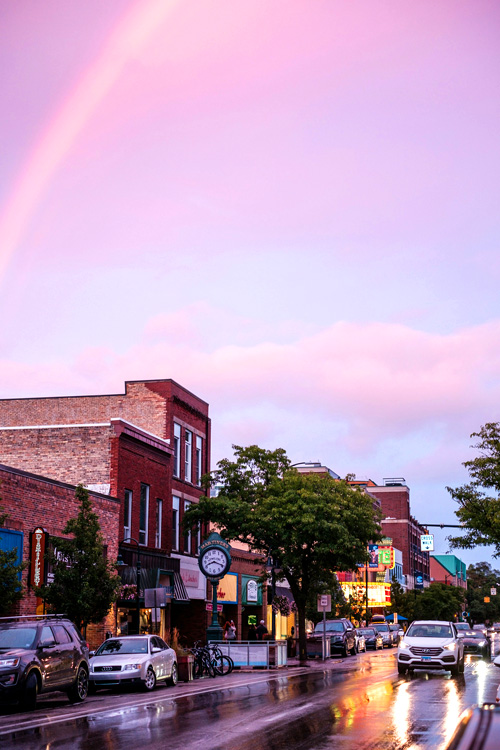
(Traverse City, Michigan, USA – Photo by Austin Park)
Traverse City celebrates cherries in every form – salsas, jams, pies, ciders, and desserts – thanks to local orchards.
The lakeside setting also means fresh fish like whitefish, trout, and perch, often served with herbs and simple sides. You’ll find cozy pubs, bakeries, and farm-to-table kitchens using regional grains, cheeses, and greens.
Craft breweries and wineries offer easy sips with burgers, pizzas, roast chicken, or veggie plates.
Two facts stand out: the modern National Cherry Festival traces back to early blossom celebrations, with the first official festival held in 1925; and in 1926, locals famously sent a giant cherry pie to President Calvin Coolidge.
The Old Mission Peninsula’s climate is moderated by Lake Michigan, giving vineyards a longer growing season.
In colder months, soups and stews with root vegetables shine; summer features fresh salads and grilled corn. Traverse City’s food balances comfort and freshness, with flavors shaped by the lake and orchards.
Must read: 12 Best Things to Do in Traverse City, Michigan: A Travel Guide for All Seasons
5. Asheville, North Carolina
Asheville brings together mountain traditions and creative cooking. Expect cornmeal, beans, greens, and country ham alongside fermented veggies, heritage grains, and craft cheeses.
Downtown places often feature wood-fired ovens, house pickles, and seasonal plates that work well with local ales and ciders. Barbecue and fried chicken are easy to find, but so are vegetarian bowls, trout dishes, and gluten-free bakes.
For a relaxed day, start with a biscuit breakfast, then stroll for snacks like soft pretzels or pimento cheese.
Two facts from Asheville’s story: the Biltmore Estate was completed in 1895 and remains the largest privately owned house in the United States; and the Blue Ridge Parkway, developed in the mid-20th century, draws travelers who stop for scenic views and nearby bites.
Cooler months bring chowders and braises; summer highlights tomatoes, peaches, and fresh herbs. The vibe is welcoming and inventive, with plenty of places to enjoy simple and flavorful meals.
Read also: 10 Best Small Towns in North Carolina: Beach, Mountain, River, & Lakeside Towns
6. Granville, Ohio
Granville is a small village with a steady, down-to-earth food rhythm. Bakeries turn out crusty loaves, morning pastries, and cookies that feel homemade. Cafes serve sandwiches with local cheeses, greens, and roasted meats, along with soups and salads that follow the seasons.
Denison University adds coffee shops and casual spots perfect for daytime bites. Try a slice of pizza or a grain bowl, then walk the historic streets with an ice cream cone.
Two facts about Granville: it was founded in 1805 by New England settlers and designed with a village green and Federal-style architecture; and Denison University began in 1831, first as a literary and theological institution before growing into the campus you see today.
Fall brings apples and warm spices; spring offers fresh greens and asparagus. Local brews and sodas go nicely with burgers, pretzels, or soft rolls. Granville’s food is straightforward and friendly, easy to enjoy…
Read next: These Are 12 Charming Small Towns to Visit in Ohio for History, Scenery, & Slow Living
7. Burlington, Vermont
Burlington sits on Lake Champlain and puts Vermont’s farming tradition front and center. Menus often feature local cheeses, maple syrup, and seasonal vegetables.
For example, grain bowls, wood-fired pies, soups with root veggies, and hearty sandwiches packed with greens. Breweries and cider houses offer easy options with cheddar snacks or charcuterie.
For a mellow day, start with pancakes touched with maple, then walk the waterfront and grab a simple sandwich.
Interesting facts: Ben & Jerry’s opened its first scoop shop here in 1978 in a renovated gas station; and Lake Champlain was a key site during the Revolutionary War, including the 1776 Battle of Valcour Island.
Summer brings berries and tomatoes; winter leans into stews and warm desserts. Coffee shops and bakeries make quick breakfasts and sweet endings simple.
The food scene focuses on ingredients close to home, served with care and a friendly vibe.
Don’t miss: 10 Best Small Towns in Vermont for a Scenic Weekend Trip
8. Santa Fe, New Mexico
Santa Fe offers rich Southwestern flavors shaped by Pueblo, Spanish, and Mexican traditions. Red and green chiles appear on enchiladas, stews, eggs, and grilled meats, with blue corn tortillas and posole bringing texture.
Markets and cafes feature piñon coffee, chile chocolate, and local cheeses that complement simple plates. For an easy plan, choose a smothered burrito, then walk the historic plaza for sweets or hot chocolate.
Two facts: Santa Fe was founded in 1610, making it the oldest state capital in the United States; and its adobe and Pueblo Revival architecture comes from centuries of building traditions adapted to climate and local materials.
Summer brings roasted corn and fresh salsas, cooler months highlight chile stews and tamales. Heat levels vary, so you can go mild or spicy.
Santa Fe’s food feels warm and rooted in place, with flavors from the region’s cultures.
9. Charleston, South Carolina (Lowcountry towns nearby)
Charleston is a gateway to Lowcountry food, and nearby small towns add calm, tasty stops. Think she-crab soup, slow-cooked greens, red rice, and seafood stews with shrimp, crab, or oysters.
Gullah Geechee traditions shape dishes with rice, okra, local herbs, and benne seeds. Day trips to places like Mount Pleasant, Sullivan’s Island, and Johns Island bring roadside seafood shacks, small bakeries, and simple cafes.
For a relaxed plan, enjoy a fish sandwich and hushpuppies, then walk a pier with sweet tea.
Two facts of the region: Carolina Gold rice became central to Lowcountry cooking and commerce in the 18th century; and Gullah Geechee communities preserved language and foodways across the Sea Islands, influencing flavors you taste today.
In summer, you’ll taste tomato pies and boiled peanuts, and in cooler months, gumbo and oyster roasts. Lowcountry dining favors coastal ingredients and patient cooking.
10. Sonoma, California
Sonoma balances rustic charm with ingredient-focused cooking. You can expect fresh salads, grilled meats, and vegetables from valley farms.
Cheese boards, olives, and breads make easy starters, while seasonal pastas and roast chicken keep meals friendly. Winery kitchens and small bistros often showcase citrus, herbs, and local dairy.
For a simple day, share roasted vegetables and a bowl of soup, then walk the historic plaza for cookies or gelato.
Two interesting facts: Mission San Francisco Solano was founded in 1823 in Sonoma and is the last mission built in Alta California; and the Bear Flag Revolt in 1846 briefly declared the California Republic right here in town.
In Spring, you’ll find peas and strawberries. In the fall, squash and mushrooms. You’ll find small producers selling olive oil, jams, pickles, and honey that fit nicely with sandwiches or cheese.
Sonoma’s food is relaxed and rooted in the fields, ideal for easygoing meals with fresh flavor.
Read next: 12 Best Things to do in Monterey, California, for a Weekend Escape