
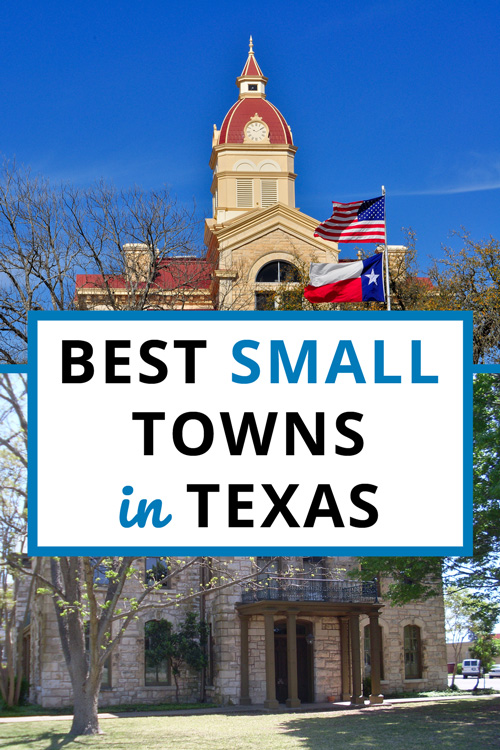
Whether you’re planning a weekend getaway or a cross-state road trip, exploring some of the small towns in Texas shows you a side of the Lone Star State you just won’t find on Interstate 10.
You’ll stumble across dusty railroad stops that somehow became art centers. Some riverside communities still hang onto their cowboy roots, and really, that mix of history and local flavor makes these places stand out.
I’ve pulled together 17 of my favorite spots. Each one’s got its own story, main sights, and some pretty friendly folks.
You’ll see why each town landed on the list, with a few details like population, founding dates, and those can’t-miss landmarks.
Grab a map, toss in a little sense of adventure, and go see what the heart of Texas is all about!
Let’s begin!
Don’t miss: 17 Cute, Small Towns in California (USA) You Have to See
Keep in mind: Our articles may contain errors, despite our best efforts. So, do a thorough research before deciding on a travel destination.
Best Small Towns in Texas, USA: My Top Picks
1. Marfa

This video will be loaded from YouTube.com, a third party. If you click "Play", you accept their terms of service, and their use of cookies.
Marfa is a small town in West Texas. It was founded back in the 1880s because trains needed a place to stop for water.
It didn’t take long for the railroad to shape the town’s growth. Later on, artists showed up and turned Marfa into a hub for art, building places like the Chinati Foundation and the well-known Building 98.
People come from all over, hoping to see those weird lights that flicker across the sky at night. These days, about 1,700 folks call Marfa home.
With its railroad roots and unexpected art scene, Marfa’s got a vibe you won’t find anywhere else.
Must read: 15 Cute, Small Mountain Towns in Colorado for Your Next Travel Adventure
2. Bandera

(Bandera, Texas by Davidlohr Bueso, CC BY 2.0)
Bandera is the county seat of Bandera County, about 47 miles northwest of San Antonio. Polish immigrants first settled here in 1855.
It became the county seat a year later, in 1856. Back in the late 1800s, Bandera was a stop on the Great Western Cattle Trail.
That’s when it picked up the nickname “Cowboy Capital of the World.” The town covers around 1.2 square miles and has about 880 residents.
These days, you can catch a rodeo, check out the annual Cowboy Mardi Gras, or stay at one of those riverside ranch guest camps. There are also historic dance halls and old buildings just waiting for you to explore.
Read next: Looking for Authentic Italy? Start with These 25 Enchanting Small Towns & Villages
3. Llano

This video will be loaded from YouTube.com, a third party. If you click "Play", you accept their terms of service, and their use of cookies.
Llano is a city in Central Texas and the county seat of Llano County.
The town started back in 1856 when Texas set aside land along the Llano River for the county and its courthouse. They built a stone courthouse in 1885, but it was damaged in 1892.
The current red-brick courthouse opened its doors in 1893. These days, about 3,500 people call Llano home.
Visitors like to go tubing on the Llano River. Some folks tour granite shops, where local stone gets carved into countertops and monuments.
White-tailed deer wander nearby, and people keep an eye out for them. The town’s small museums show off old photos: floods, iron mining, and pioneer life all get their moment.
4. Marble Falls
(Marble Falls, Texas by Nicolas Henderson, CC BY 2.0)
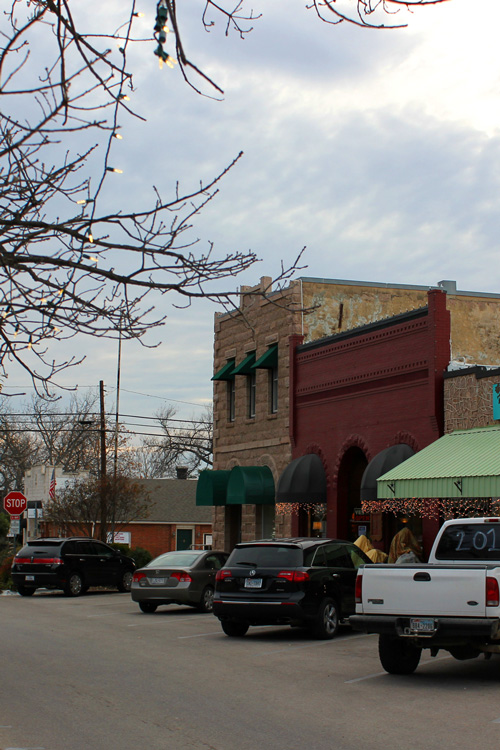
Marble Falls is located in Burnet County, right on Lake Marble Falls in central Texas. The city got its start in 1887 when Adam Rankin Johnson mapped out the spot next to the river’s natural marble falls.
Johnson didn’t stop there, he built himself a house, started a college, and even set up a factory by 1897. Then in 1951, the Max Starcke Dam came along, flooding the original falls and turning them into what’s now Lake Marble Falls.
People head here to fish, boat, or paddle around the lake. Some just hang out in the parks along the water or go to art galleries and shops near the courthouse square.
Back in 1917, the town made history by electing Texas’s first woman mayor. These days, about 7,500 people live here.
5. Dripping Springs
Dripping Springs is a small city in Hays County, part of the Greater Austin area. It started out back in 1850 as a stagecoach stop along the road from Austin to Fredericksburg.
The city got its name from water dripping down limestone ledges. Dripping Springs didn’t become an official city until 1981.
Today, about 8,700 people call it home. Folks swing by to check out Hamilton Pool Preserve, a natural swimming hole with a rocky grotto.
Pedernales Falls State Park is nearby, where water slides over smooth rock slabs. The annual Founders Day festival brings the community together.
You’ll also find plenty of farms, vineyards, breweries, and distilleries in the area. It’s a spot that’s easy to like, especially if you enjoy a good drink.
6. Jefferson

(Jefferson, Texas by Nicolas Henderson, CC BY 2.0)
Jefferson is in Marion County, in Northeast Texas. The city got its start around 1841 on land once held by the Caddo Indians.
It quickly grew into a lively river port along Big Cypress Bayou. Steamboats would pull in, unloading goods and passengers, until the waterway dropped in 1873 and changed everything.
Jefferson was actually the sixth-largest town in Texas. But when river traffic dried up, the population shrank fast.
Now, about 1,850 residents live in Jefferson. You can see the original brick streets, check out historic homes, or browse through antique shops.
Horse-drawn carriage tours roll through downtown, and paddle-wheel boat cruises still drift along the bayou.
7. Fredericksburg

(Fredericksburg, Texas by Manuel Delgado Tenorio, CC BY-SA 2.0)
Fredericksburg is the county seat of Gillespie County. German settlers founded it in 1846 and named it after Prince Frederick of Prussia.
The town sits roughly 70 miles northwest of San Antonio. It’s also about 80 miles west of Austin.
About 11,542 people live in Fredericksburg. Main Street draws visitors with its characteristic shops and German-style restaurants.
People wander through the museum. Others head out to taste wine at local vineyards, there’s definitely no shortage of things to do!
8. Wimberley
Wimberley, in Hays County, Texas, started back in 1848 as a trading post by Cypress Creek.
In 1856, William Carvin Winters showed up and built a gristmill. Folks first called it Winters’ Mill, then Cude’s Mill, and after Pleasant Wimberley bought it in 1874, the name stuck.
The old mill finally shut down in 1925. Much later, the community officially became a city in 2000.
Today, about 2,880 people live in Wimberley. Visitors flock to swim at the famous Blue Hole.
You’ll find people browsing shops and art galleries around Wimberley Square. The local wineries, breweries, and distilleries keep things interesting.
There’s also the monthly Market Days flea market. And every Fourth of July, the rodeo draws a crowd: can’t say it’s not a lively little place.
9. Gruene
Gruene is located in Comal County, right on the edge of the Guadalupe River. It’s a tiny district with roots that stretch back to 1850.
German farmer Ernst Gruene started things off by building a home and a mercantile store for cotton growers in the area. Soon after, the community put up a cotton gin and a gristmill.
Then in 1878, Gruene Hall opened its doors. These days, it’s known as one of Texas’s oldest dance halls.
Gruene nearly became a ghost town after a boll weevil outbreak and changes to the highway. By the 1970s, though, a handful of residents decided to restore the 25-acre historic district.
They opened shops, restaurants, and even an inn. Now, only about 20 people actually live here.
But visitors still flock here to dance, eat, and see those old riverbank buildings.
10. Salado
Salado is a small village in Bell County, Texas. You’ll find it about halfway between Austin and Waco, right off Interstate 35.
The town first incorporated back in 1867, after settlers decided to build a bridge over Salado Creek. But really, things started rolling in 1852 when the Stagecoach Inn opened up to serve cattle drivers moving along the Chisholm Trail.
Today, around 2,390 people reside here. Visitors can tour the old Stagecoach Inn, wander through the Salado Sculpture Garden, or catch a glass-blowing demo at Salado Glassworks.
Annual events like the Scottish Festival and Christmas Stroll bring a little extra energy to the place. If you like the outdoors, the spring-fed Salado Creek Natural Landmark has some nice spots for fishing or just picnicking under those big old oak trees.
11. Round Top
Round Top is a tiny town in Fayette County, Texas. It covers less than one square mile.
Just 113 people live here. Back in 1831, James Winn bought the land as part of Stephen F. Austin’s colony.
Later, the town got its name from a house with a round tower. German settlers showed up in the mid-1800s and built farms.
They also built the oldest Lutheran church sanctuary in Texas. These days, visitors flock here for the twice-yearly antiques fair.
Some folks come to see what’s called the world’s smallest Catholic church. Others walk through the shops and restored buildings of Henkel Square.
Monument Hill stands nearby. You’ll also find the ruins of Kreische Brewery and a free historic library on Main Street.
12. Granbury
Granbury is the county seat of Hood County. It’s about 35 miles southwest of Fort Worth, right on the Brazos River.
Settlers founded the town in 1854. They named it after General Hiram B. Granbury, who died in the 1860s conflict between the states.
In 1969, a dam went up on the Brazos River and created Lake Granbury. Now, people come here for fishing and boating.
The historic Town Square has buildings on the National Register, like the Opera House and the old Railroad Depot museum. The city even keeps one of the few drive-in theaters still running in Texas.
As of this writing, Granbury’s population is about 12,600.
13. Comfort
Comfort got its start back in 1854 when German settlers laid out the town along the south fork of the Guadalupe River.
They used local limestone for homes and shops, so now the streets, still stone, make up what’s called the Comfort Historic District.
About 1,900 people live here as of 2020.
Visitors walk through antique stores, see small galleries, or taste wines from vineyards just outside town.
Every October, Comfort throws a lively Oktoberfest. In spring, the Willow City Loop nearby bursts with bluebonnets and Indian paintbrush.
Summer evenings? Folks head to Old Tunnel State Park to watch thousands of Mexican free-tailed bats pour out of an old railroad tunnel.
14. Luckenbach
Luckenbach got its start back in 1849 when Jacob and August Luckenbach, a couple of German farmers, set up a trading post and general store.
By 1886, the place even had its own post office. Over time, though, the population dwindled until just three folks stuck around.
In 1970, a group of music fans came together and bought the property. They decided to turn it into a country-music venue.
These days, only about three people actually live there. Still, more than fifty thousand visitors show up every year.
People swing by to catch live music at the old dance hall. Some browse for Luckenbach hats and T-shirts in the general store, while others just relax with a cold drink beneath those big oak trees.
15. Alpine
Alpine is the county seat of Brewster County, in far West Texas. The town got its start back in 1882 when railroad workers pitched their tents near a spring and called it Osborne.
For a short while, people called it Murphyville. By 1888, though, they settled on the name “Alpine.”
Things really started rolling in 1920 when Sul Ross State Normal College opened its doors. That school eventually became Sul Ross State University.
These days, about 6,039 people live in Alpine. Visitors walk through the Museum of the Big Bend or check out art galleries along Holland Avenue.
Some people hike up Hancock Hill for those great views. Others use Alpine as their jumping-off point for adventures in Big Bend National Park.
16. Kerrville
Kerrville sits on both banks of the Guadalupe River in central Texas. It’s about fifty miles northwest of San Antonio.
Folks officially laid out the town in 1856 and named it after James Kerr, a hero of the Texas Revolution. Sawmills, though, were already running here in the 1840s.
These days, about 24,900 people live in Kerrville. Visitors come for the parks along the river, wander around Schreiner University’s campus, and check out the Museum of Western Art.
The annual Kerrville Folk Festival draws a crowd. There’s also the Official State Arts & Crafts Fair, which is really worth a look.
17. Georgetown
Georgetown in Williamson County, was founded back in 1848 and named after George Washington Glasscock.
It officially became the county seat in 1866. The city grew up around clear springs that offered fresh water, a lucky break in this part of Texas.
The downtown square stands out for its Victorian buildings, all impressively well-preserved. Every April, the Red Poppy Festival takes over the area and brings in crowds.
Southwestern University, which claims the title of Texas’s oldest university, sits just half a mile from the historic district.
The city covers about 60 square miles and lies roughly 30 miles north of Austin. Georgetown’s estimated population is around 101,000.
Visitors often tour the old courthouse. Others prefer to walk flower-lined streets or browse local boutiques.