
Italy is a place where history, art, and daily life mix in ways you just don’t see everywhere else. Walk through its cities or quiet villages, and you’ll find traditions woven right into the daily routine.
Markets bustle, workshops buzz, and family-run shops display items that have many stories from the past. Skills pass from one generation to the next, and you can feel that in the things they make.
Picking out what to bring home isn’t just about shopping. It’s about connecting with the local culture, maybe even keeping a little piece of your trip alive.
Florence has its leather, Venice its glass. Every region seems to have something unique to offer. Food and drink matter here, too. Olive oil, wine, limoncello… These all reflect the land and climate where they’re made.
Even something as ordinary as coffee or pasta can remind you of Italian kitchens and the warmth of shared meals.
Here I’ve put together 10 ideas for what to buy in Italy. Each one ties back to a place, a tradition, or a flavor that makes traveling here feel a bit more special.
Maybe you’ll choose a small keepsake or something practical. Either way, you’re bringing home a piece of Italy’s everyday beauty.
Let’s begin!
Read also: Top 10 Must-Try Foods in Italy for a True Taste of La Dolce Vita
Keep in mind: Our articles may contain errors, despite our best efforts. So, do thorough research before deciding on a travel destination.
1. Leather goods from Florence

This video will be loaded from YouTube.com, a third party. If you click "Play", you accept their terms of service, and their use of cookies.
Florence has a long history with leather. Local guilds began setting rules for leatherwork in the Middle Ages. Today, the city still feels like a living workshop. When you buy a bag, belt, or wallet in Florence, you often meet the maker in a small studio or market stall.
You can ask about the type of leather, how it was tanned, and how to care for it. Many artisans use vegetable tanning, which gives a warm color and a natural look that changes slowly over time.
The San Lorenzo Market and shops near Santa Croce are known for leather sellers. You can also find family-run workshops that make items by hand, piece by piece.
If you want a custom-fit belt or a monogram, many places can do that while you wait. To spot quality and beware of counterfeits, look for even stitching, sturdy hardware, and smooth edges. And ask questions…
You can also get a dust bag to store your item and keep it dry. A leather piece from Florence can become a daily companion and a reminder of your trip.
Don’t miss: 10 Best Things to See & Do in Florence, Italy: Summer Travel Ideas
2. Murano Glass from Venice

This video will be loaded from YouTube.com, a third party. If you click "Play", you accept their terms of service, and their use of cookies.
Murano glass comes from the island of Murano near Venice. Glassmakers moved there in the 1200s. Some say it was to keep fires away from the city. Others say it was to protect glassmaking secrets.
Either way, the island became known for skilled work. Today, you can visit studios and watch artisans gather, blow, and shape hot glass with metal tools. The bright colors come from minerals added to the glass.
Cobalt makes blue. Gold leaf adds shine in pieces called “aventurine.” You can buy small items like pendants, paperweights, and beads, or larger vases and glasses. Many pieces are signed or come with a certificate from the workshop.
To check if something is Murano-made, ask about the studio and the process. True pieces often have tiny bubbles and slight variations that show they were made by hand.
Pack glass with care and consider shipping for bigger items. A Murano piece brings home the light and color of Venice.
Read also: 15 Best Things to See & Do in Venice (Italy) for an Unforgettable Trip
3. Ceramics from Deruta or the Amalfi Coast
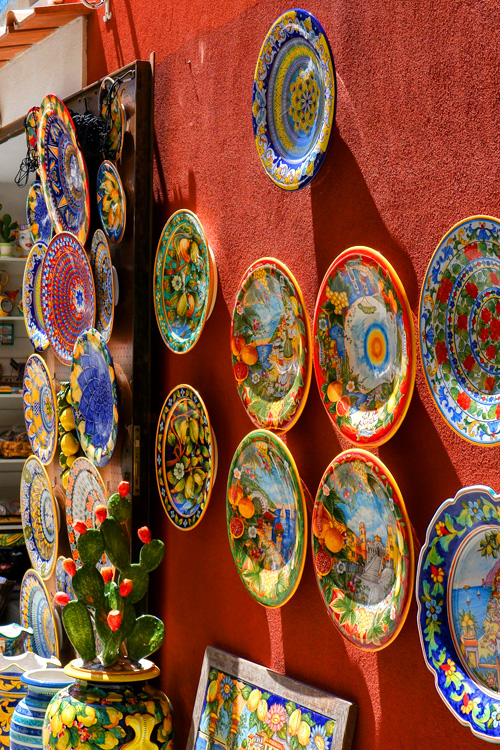
(Ceramics Shop in Positano, Amalfi Coast, Italy – Photo by Antonio Sessa on Unsplash)
Italian ceramics are colorful and full of patterns. Two famous places are Deruta in Umbria and towns along the Amalfi Coast, like Vietri sul Mare.
Deruta has made pottery since the Renaissance. Designs often include scrolling leaves, birds, and old family crests. On the coast, you’ll see bright lemons and marine blues that match the sea. In many shops, you can watch painters decorate plates, bowls, and tiles by hand.
Each piece is fired in a kiln and glazed to make it safe for daily use. Look on the bottom for the town name and maker’s mark. That helps you understand where it was made. If you plan to use a plate for hot food, ask about its heat resistance.
For tiles, bring measurements of your space before you buy. Ceramics can be heavy, so ask about shipping. Small items like coasters, mugs, and olive dishes travel well.
When you set a Deruta plate on your table or hang an Amalfi tile in your kitchen, you add a bit of Italian craft to your home life…
Read next: 15 Things To Do on the Amalfi Coast (Italy): Ideas for Every Type of Traveler
4. Olive Oil from Tuscany or Puglia

(Olive Tree Branch, Calenzano, Florence, Italy – Photo by Lucio Patone)
Italy has many olive-growing regions, and each one tastes a little different. Tuscany often makes oils with a peppery finish. Puglia, in the southeast, is known for rich, fruity flavors.
Harvest season is usually in late fall, and some mills welcome visitors. You can learn about cold pressing and see how olives move from fruit to golden oil. Extra virgin means the oil is from the first press and meets strict standards.
When shopping, look for the harvest date and the region. Dark bottles help protect the oil from light. Smaller bottles keep flavors fresher once opened. If you want to bring some home, ask about travel-safe packaging. Some shops offer tins that are easier to carry.
Try the oil with bread, on salads, or drizzled over grilled vegetables. Use it within a few months for the best taste. A bottle of Italian olive oil turns simple meals into something special and keeps the memory of your trip on your table.
5. Wine from Chianti, Barolo, or Prosecco Regions

(Chianti Wine – Photo by Brett Jordan)
Italy’s wine regions are varied and full of history. In Tuscany, Chianti is made mainly from Sangiovese grapes. You’ll see the black rooster symbol on many bottles, which marks certain Chianti areas.
In Piedmont, Barolo is often called the “wine of kings” in old stories. It comes from Nebbiolo grapes and is known for long aging and complex aromas. In the northeast, Prosecco is a sparkling wine that feels easy to enjoy.
Many vineyards offer tastings and explain how soil and climate shape flavor. If you visit wineries, ask about shipping options or travel-safe packaging. For labels, learn a few terms: DOC and DOCG show quality rules, and “Riserva” usually means longer aging.
Bring a small notebook and write down what you liked. You can pair Chianti with pasta and tomato sauce, Barolo with hearty dishes, and Prosecco with snacks or light desserts.
A case is heavy, so start with one or two bottles. Sharing a glass at home can bring back your time among the vines.
Read also: 30+ Tuscan Countryside Aesthetic Landscapes for Inspiration
6. Limoncello from the Amalfi Coast
Limoncello is a sweet lemon liqueur linked to the Amalfi Coast and Sorrento. Local lemons have thick skins full of flavorful oils. That zest is soaked in alcohol, then mixed with sugar syrup and water.
Families have their own recipes and often pass them down. You can find small producers who make limoncello in small batches, sometimes using traditional methods. When tasting, notice how the scent rises from the glass and how the sweetness balances the lemon bite.
Bottles come in many shapes and sizes, and some are decorated like souvenirs. Keep limoncello cold and serve it in small glasses after a meal. It can also be added to cakes or used in simple cocktails.
If you want to take some home, choose sealed bottles and pack them well. Ask the shop if they have protective sleeves. Limoncello feels like sunshine in a bottle, and every sip brings back terraces, sea views, and the scent of citrus trees along the coast.
7. Balsamic Vinegar from Modena
Traditional balsamic vinegar from Modena has deep roots. Families age vinegar in a series of wooden barrels, often for many years. Each barrel adds notes from the wood, like cherry or oak. The liquid grows thicker and richer over time.
True “Aceto Balsamico Tradizionale” is made only from cooked grape must and must follow strict rules. Bottles for traditional balsamic have a special shape and are sealed with a numbered cap.
There is also “Aceto Balsamico di Modena,” which blends grape must with wine vinegar and is more common for daily use. When shopping, ask the staff to explain the different grades and best uses.
The thicker kinds are nice over cheese, strawberries, or grilled meat. Lighter types work well for salads and marinades. A small bottle goes a long way, so you do not need much.
Store it away from light and heat. Bringing home balsamic from Modena adds Italian tradition to simple dishes and makes everyday cooking feel amazing.
8. Fashion from Milan
Milan is a major city for fashion, full of design history and modern style. The “Quadrilatero della Moda” is the main shopping area, with well-known brands and sleek window displays. You can also find smaller Italian labels and young designers on side streets.
Outlet stores around the city offer last-season pieces at lower prices. If you like classic items, consider shoes, scarves, or a simple blazer that pairs with many outfits. Ask about alterations for a better fit, since many shops can help.
Check fabric tags and look for clean seams and quality buttons. Try pieces that feel comfortable for daily wear, not just for special events. In Milan, people pay attention to the details.
Belts, bags, and sunglasses can change a look without taking up much space in your luggage. Sales happen seasonally, so timing can matter. A few well-chosen items let you bring home the city’s sense of design and make your wardrobe feel fresh.
Don’t miss: 15 Best Things To Do in Milan (Italy) in Summer
9. Coffee from Naples
Naples has a strong coffee culture. The city is known for bold espresso blends and a tradition of home brewing with a small pot called a “cuccuma.” Many local roasters focus on the balance between body and aroma.
You can find ground coffee packed for espresso machines or stovetop moka pots. When you shop, ask about the roast level. Medium to dark roasts are common for the area. Try a bag that suits your method at home.
If you use a Moka pot, aim for a fine grind and keep the heat low. In cafes, you may hear about a “suspended coffee,” where someone pays for an extra cup for a stranger who needs it. It is a small act of kindness linked to the city’s spirit.
Pack coffee in sealed bags to keep it fresh. Use it within a few weeks for the best taste. A morning espresso from Naples brings a bit of Italian rhythm to your day and keeps your travel story brewing…
Read next: 22 Best Things to See & Do in Naples, Italy: Ideas You Can’t Miss
10. Handmade Pasta or Truffle Products from Umbria
Handmade pasta and truffle products connect you to simple, flavorful cooking. In Umbria, truffles grow in wooded hills and are found by trained dogs. Shops sell truffle oils, salts, and spreads that lift everyday dishes.
When buying oil, look for labels that show real truffle aroma, and consider small bottles to keep it fresh. For pasta, you can find special shapes and flours, like bronze-cut spaghetti that holds sauce well.
Some stores offer dried pasta with long drying times, which helps texture. Ask how to pair items: truffle paste on toast, or stirred into eggs or risotto.
Bring measurements of your pantry space to choose sizes that fit your luggage. Check customs rules for food if you plan to travel internationally. A few jars and a bag of pasta can make you some meals at home.
Cooking with these ingredients turns a weeknight into a small Italian dinner and keeps your travel memories on the plate.
Read also: 9 Mistakes to Avoid in Italy for a Stress-Free Adventure